
By FencingWise Editorial Team · Updated 17 September 2026.
Read the direction as well as the numbers
A rectangular opening has two dimensions. On a drawing, identify which runs horizontally across the panel and which runs vertically. Turning the panel or reversing the label order can make a specification appear different even when it describes the same pattern.
The wire direction matters too. The horizontal opening is bounded by vertical wires; the vertical opening is bounded by horizontal wires. In twin-wire construction, examine the actual section rather than simply adding both horizontal wire diameters to a single-wire formula.
A clear-opening example
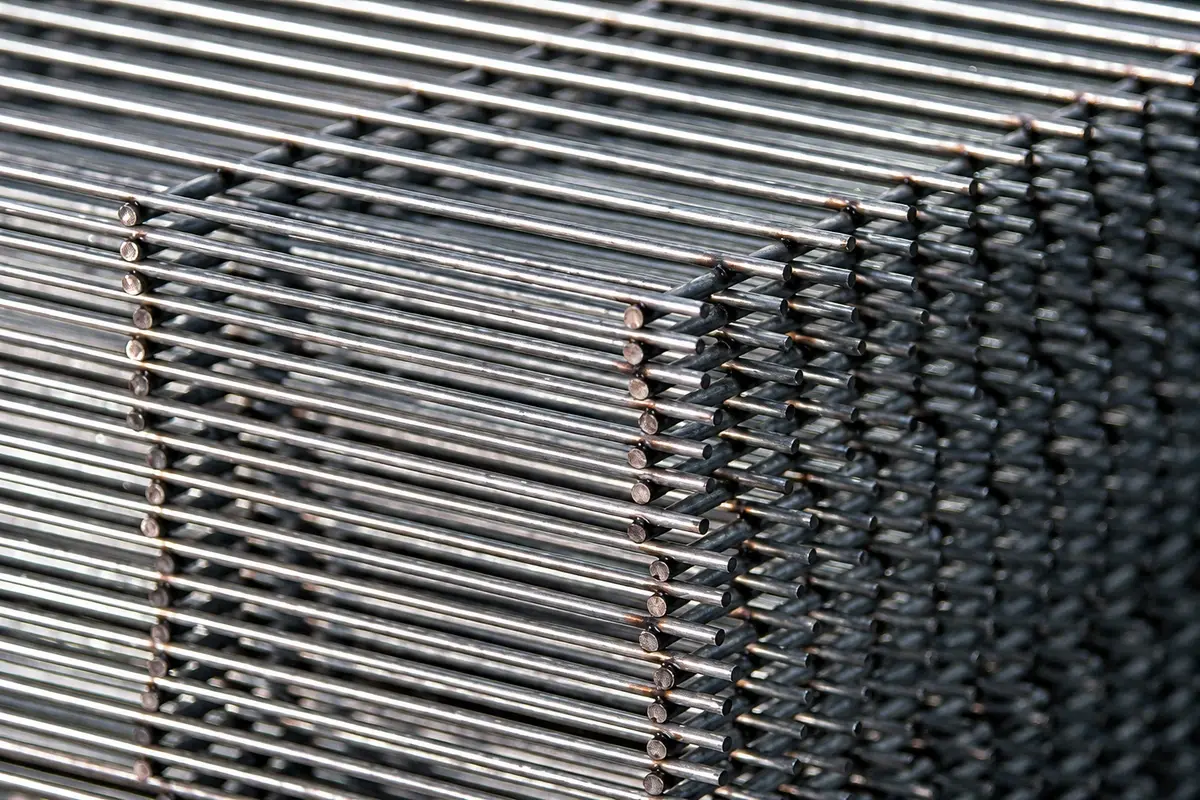
For equally sized, straight wires in one plane:
Clear opening = wire-centre spacing − finished wire diameter.
Suppose a drawing specifies 50 mm between vertical-wire centres and a finished diameter of 5 mm. The calculated horizontal clear opening is 45 mm. If horizontal-wire centres are 200 mm apart with the same diameter, the vertical clear opening is 195 mm.
This is an explanatory example, not a standard FencingWise product size. It assumes parallel, round wires with the stated finished dimensions. Coating, weld geometry and shaped or paired wires require attention at the actual measuring position.
Let the intended use narrow the options
Smaller openings leave less space for access through the mesh, but aperture is only one part of a fence. Wire dimensions, panel construction and the surrounding connections also affect the result.
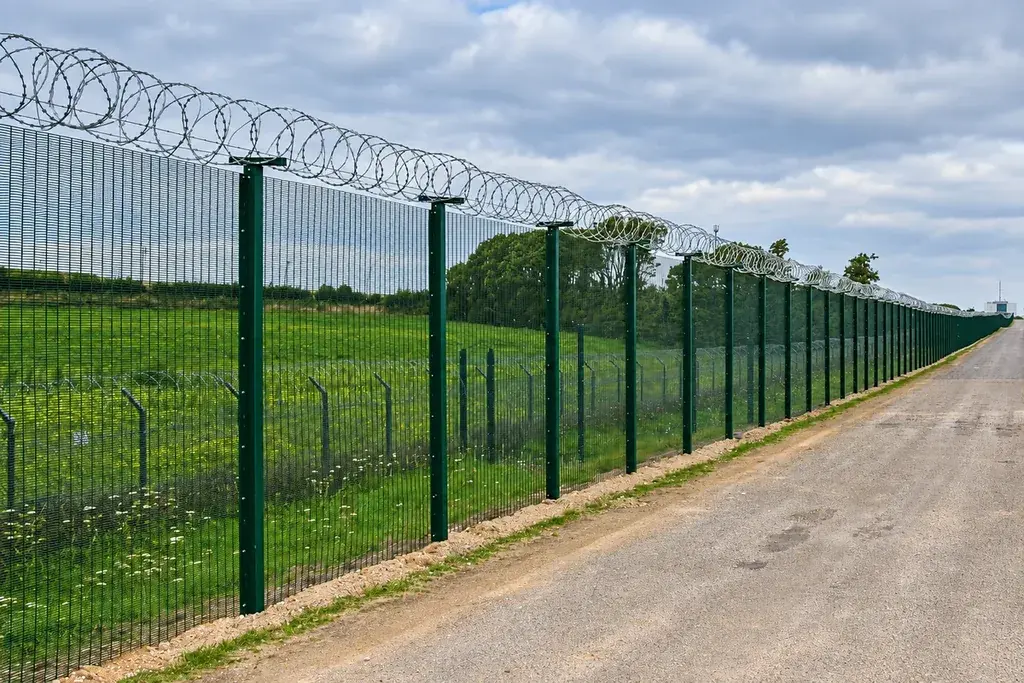
For ball containment, the sport and ball size matter alongside the configuration and evidence for the enclosure. For security, close spacing can restrict handholds without establishing a tested resistance level. For visibility, consider wire thickness and viewing angle as well as the nominal aperture.

No general mesh-size chart can establish suitability for every safety or containment application. The project requirements need to identify what the opening must achieve.
Record enough to repeat the measurement
A useful inspection record includes:
- The two aperture dimensions and whether they are centres or clear gaps.
- The direction of each measurement on the installed panel.
- Wire diameters and whether those include coating.
- The measuring location, including any profile or rebound zone.
- The drawing revision and permitted tolerances.
Measure several relevant positions according to the agreed inspection plan rather than treating one opening as proof of the whole panel. See pre-shipment inspection for recording observations.
The 358 explanation shows why the measurement convention matters for close mesh. The 3D and double wire comparison explains why a panel's shape needs a separate description.