
By FencingWise Editorial Team · Updated 17 September 2026.
A shape difference and a wire difference
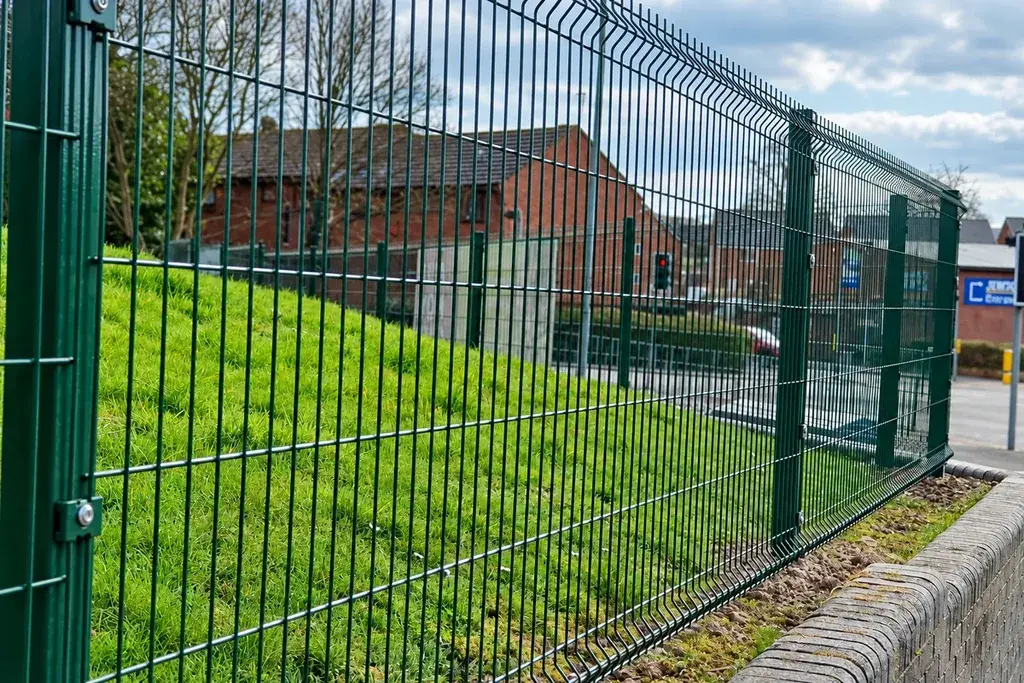
“3D” commonly describes the V-shaped pressings visible along the panel. The name does not specify wire diameter, aperture or the number and depth of the bends. A profile drawing is needed to describe the actual shape.
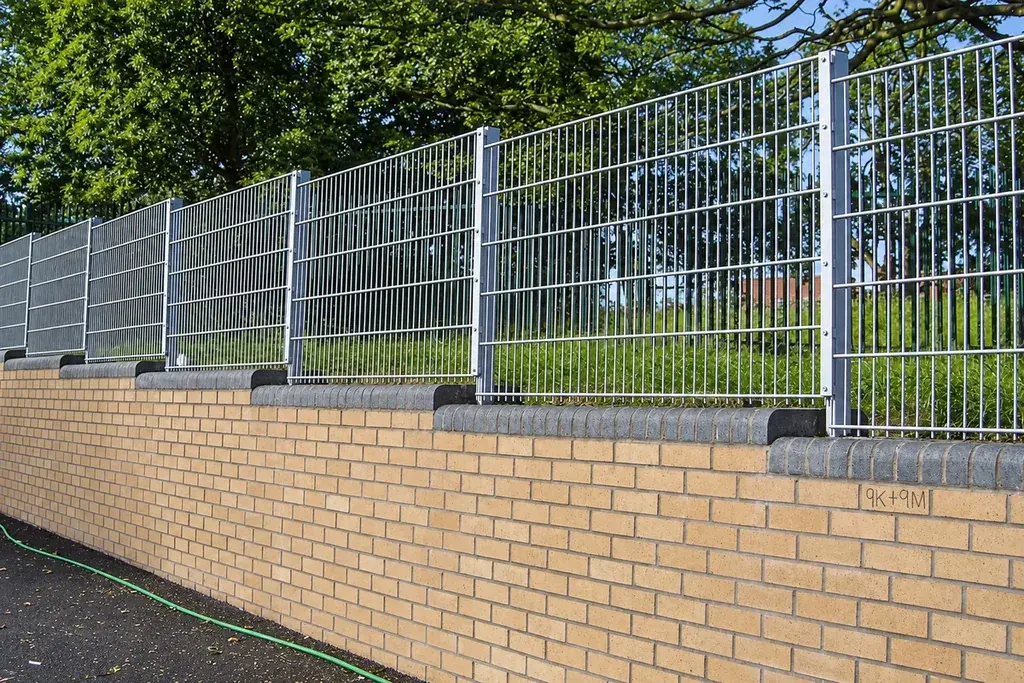
Double wire designations such as 656 and 868 describe nominal wire diameters. In a 656 panel, paired 6 mm horizontal wires sandwich 5 mm vertical wires; 868 uses an 8/6/8 mm arrangement. Those labels do not fix the mesh spacing or panel width.
| Comparison | 3D profiled mesh | Double wire mesh |
|---|---|---|
| Visible feature | Horizontal formed bands project from the face | Paired horizontal wires on a flat face |
| Key drawing detail | Bend location, depth and direction | Twin-wire dimensions and edge arrangement |
| Fitting compatibility | Clips must suit the panel profile | Clips or bars must suit the twin-wire thickness |
| Common evaluation route | General perimeter and area demarcation | Open-mesh perimeter or a separately defined sports configuration |
Choose from the required face and duty
For a general boundary where the brief permits profiled mesh, 3D panels offer a formed-panel option. Where the design calls for a flat face with paired horizontal wires, double wire is the relevant family.
A playing area needs a more specific decision. Repeated ball contact, lower-zone mesh and court-side connections can call for a sports assembly rather than either standard perimeter panel. The rebound mesh comparison explains that additional requirement.
Neither product name provides a universal strength or price ranking. A heavier wire, different post spacing or stronger connection can change the comparison, and any required structural or security performance needs evidence for the assembly.
Fittings are part of the change
When changing from 3D to double wire, check the seating surface, fixing holes and the distance between post centres. A bracket that holds a single wire beside a bend may not accommodate paired horizontal wires.
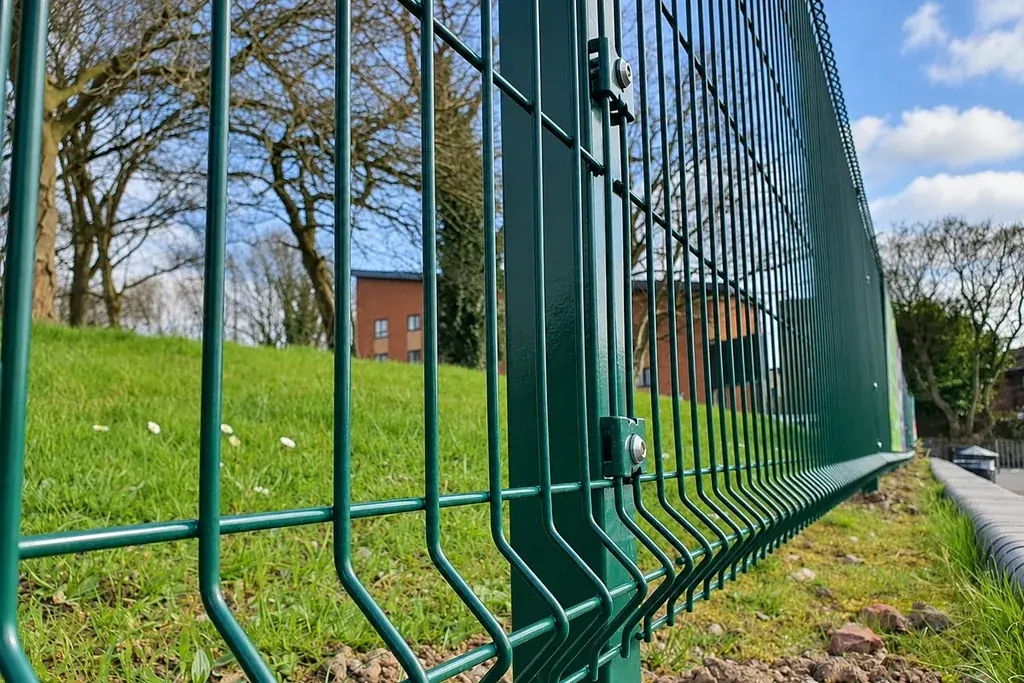
At a corner or stepped section, the connection geometry becomes especially visible. The panel may need a different fixing position even when its overall dimensions appear to match. Keep posts and fixings in the comparison rather than evaluating the panels in isolation.
Compare the actual material packages
Set out the required length and height, then list the panel quantity, post types, fittings, gates and finish for each option. Differences in closing bays and edge details should be included before comparing totals.
Start with 3D welded mesh or 656 double wire. If the question is between two twin-wire sizes rather than two panel forms, use the separate 656 and 868 guide.