
Measure the proposed coverage
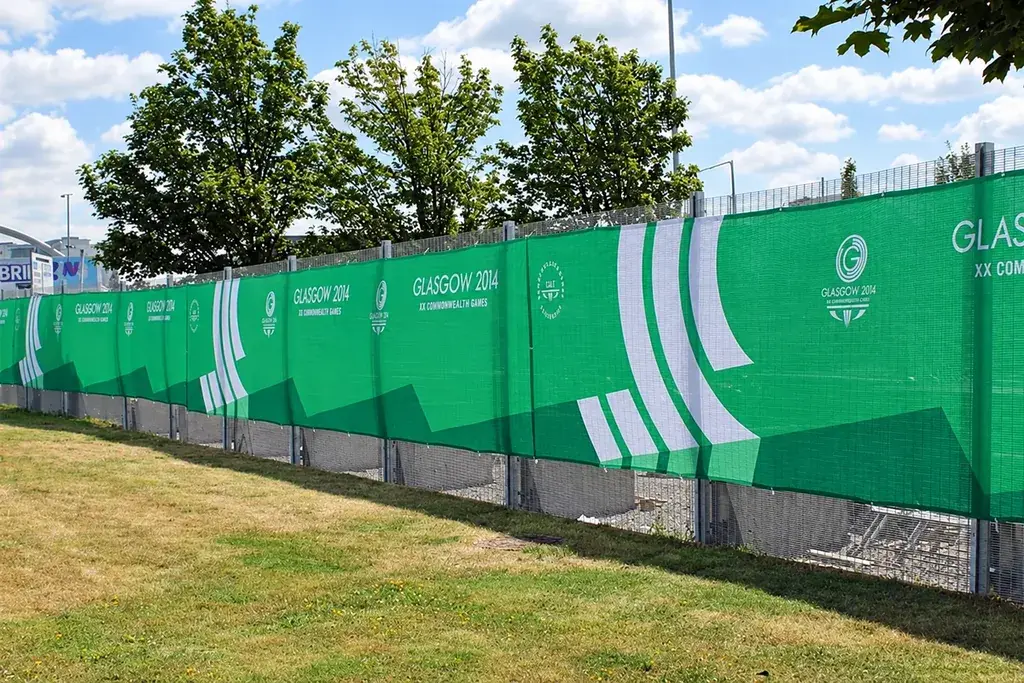
An illustrative panel 3.5 m wide and 2.0 m high has a gross face area of 7.0 m². A banner 3.0 m by 1.5 m covers 4.5 m², or about 64.3% of that gross face. Ten identical banners provide 45 m² of geometric coverage.
These numbers describe the proposed installation. They do not calculate wind force, because material permeability, aerodynamic behaviour, location and support conditions remain unresolved. A claimed fabric porosity is not automatically the same as a reduction in load on the fence.
Record the screen's actual dimensions and position. A banner concentrated near the top can create a different loading arrangement from one distributed lower down, even where the total area is the same.
Identify the original approved configuration
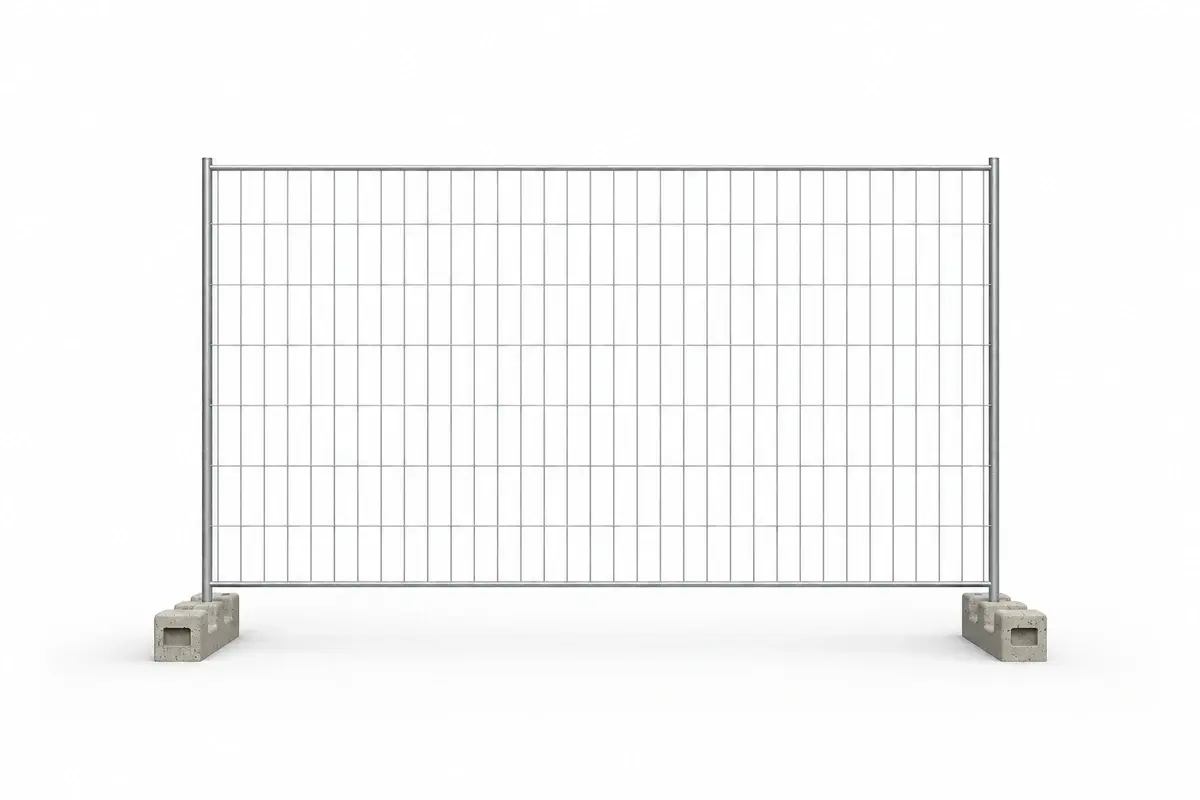
Find the drawing or instructions that apply to the existing panels, feet, couplers, braces and ballast. Check whether they expressly include the proposed screen. A calculation for a bare mesh run should not be treated as approval for a covered run.
HSE's public-protection guidance highlights the wind loading of sheeted site boundaries. The design needs to cover the support and fixing arrangement as well as the visible face. HSE: protecting the public.
Send the reviewer a defined change
| Information | What to provide |
|---|---|
| Existing fence | Component references, height and layout revision |
| Screen | Material, size, permeability evidence and edge details |
| Position | Elevation showing each covered panel and sign |
| Attachment | Proposed fixing type and spacing for assessment |
| Site | Exposure, ground, adjacent access and operational constraints |
The purpose is to obtain an assessed detail, not merely permission to add a fabric. The response should identify what changes, if any, are needed in supports, connections and operating procedures.
Do not turn fixings into an improvised release system
Ties that break unpredictably are not a reliable wind-management strategy. A detached screen can itself create a hazard, and the point of release may not be controlled. Use the attachment and operating method specified for the assessed arrangement.
Equally, strengthening the ties alone may transfer more load into a panel or support that was not designed for it. Review the load path through the complete system instead of optimising one component in isolation.
If a controlled removal procedure is part of the approved plan, it needs a safe trigger, responsible person, access method and action sequence. Do not wait until severe conditions make removal unsafe.
Include signs and small covered areas in the change record
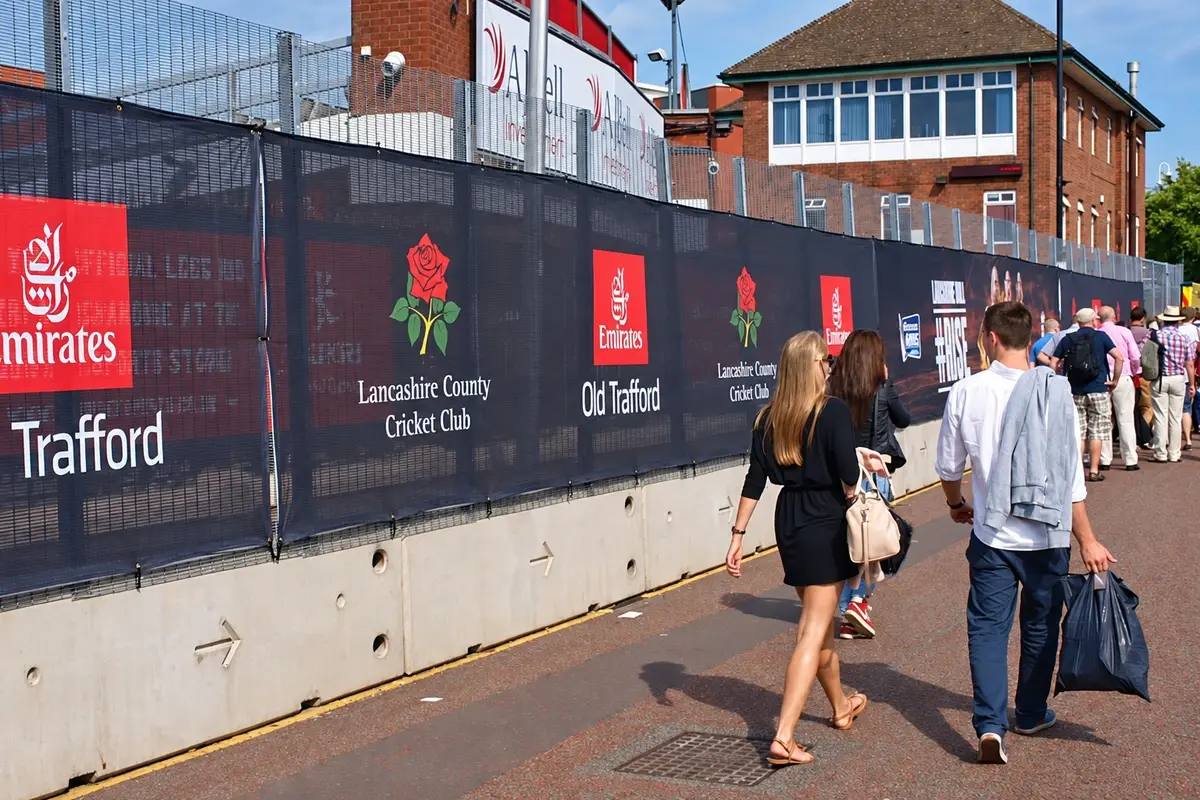
Record isolated advertising boards, directional signs and decorative wraps as well as continuous screening. Their size and position can matter even where most of the fence remains open. A sign attached across a joint may also affect access to the couplers or the way adjacent panels move.
Give the reviewer an elevation showing the actual attachments. If a marketing contractor installs the signs after the fencing contractor leaves, the handover process should still control that change. The approved fence arrangement should not depend on one team being unaware of another team's work.
During inspection, compare the installed signs with the accepted schedule. If a panel has gained additional coverage, record the difference and follow the site's change procedure. Do not describe the fence as matching its wind assessment merely because the original fabric remains unchanged; later additions can alter the configuration that the assessment was intended to cover.
Approve the change before site installation
- Record the existing configuration and the proposed screen areas.
- Obtain the applicable design review and revised installation detail.
- Confirm that the required supports fit within the available site space.
- Install and inspect the complete arrangement before use.
- Update the handover record and the inspection checklist.
Keep unused panels or substitute fabrics out of the approved schedule until they are reviewed. An apparently minor advertising change can alter the assumptions behind the boundary.
For the document review, use temporary fence wind-loading information. For routine condition checks after the change, use handover and daily inspections. Both should refer to the screened configuration actually present on site.