
Describe the environment at the actual railing
Record whether the assembly receives rain washing, salt spray, irrigation or deposits from nearby traffic and industry. Sheltered areas may retain contamination even where an exposed face is regularly washed. Include the underside of rails and the surfaces beneath clamps in the inspection plan.
Stainless steel can suffer chloride-related pitting and crevice corrosion in aggressive conditions. Select the grade and detailing for the exposure; do not treat stainless steel as universally corrosion-proof.
Aluminium likewise needs a suitable alloy, finish and connection detail for its environment. A powder coating can improve appearance and protection, but its suitability depends on preparation, application and service conditions.
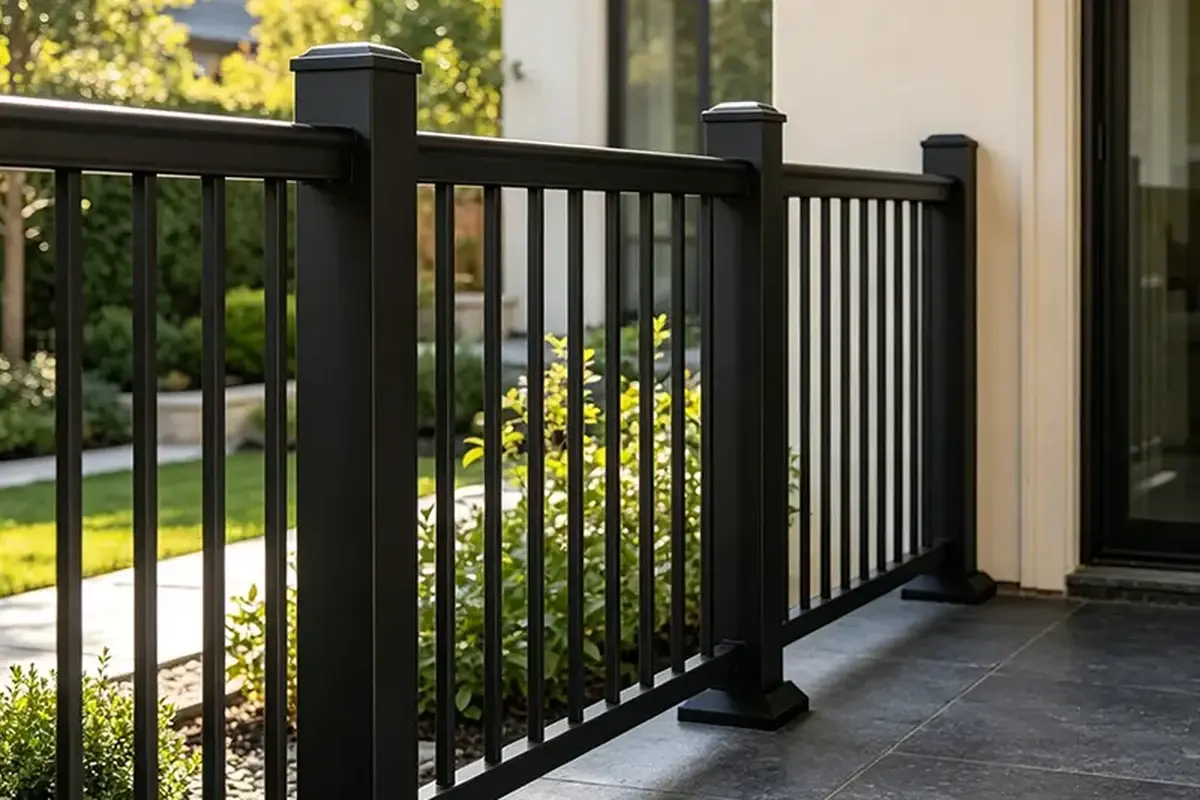
Compare specified materials and finishes
Ask for the aluminium alloy and temper or the stainless grade, alongside the finished surface description. A polished appearance is not a grade certificate. A colour description does not identify the pretreatment beneath a coated finish.
| Interface | Aluminium proposal | Stainless proposal |
|---|---|---|
| Fabricated joint | Joining process and finishing sequence | Weld treatment and final surface condition |
| Fastener contact | Compatible materials and separation detail | Grade and crevice arrangement |
| Concealed support | Drainage and access for inspection | Deposit traps and access for cleaning |
| Replacement | Exact extrusion or section identity | Section, grade and surface specification |
Do not transfer a successful detail from one material to the other without reviewing the connection. Similar dimensions can conceal different wall thicknesses and joining methods.
Use mass as one input, not the entire decision
For an illustrative comparison, assume an aluminium panel weighs 12 kg and a stainless panel satisfying the same project brief weighs 31 kg. Forty panels weigh 480 kg and 1,240 kg respectively, a difference of 760 kg before posts and packing.
These are assumed finished-panel masses, not catalogue values. The difference may affect handling or transport, but it does not prove which design has the lower installed cost. The heavier assembly may use different fixing and lifting arrangements; the lighter assembly may require a different section size.
Ask for the actual finished mass and packing dimensions. Where a railing is intended as fall protection or guarding, obtain the required design and evidence for that duty rather than treating a boundary-fence comparison as sufficient.
Review fabrication contamination and drainage
The fabricator should explain how the required surface is achieved after joining and how it is protected through handling. Inspect finished joints and sheltered interfaces, not only the middle of a straight bar. A sample can look excellent on its exposed face while retaining debris or water behind a decorative collar.
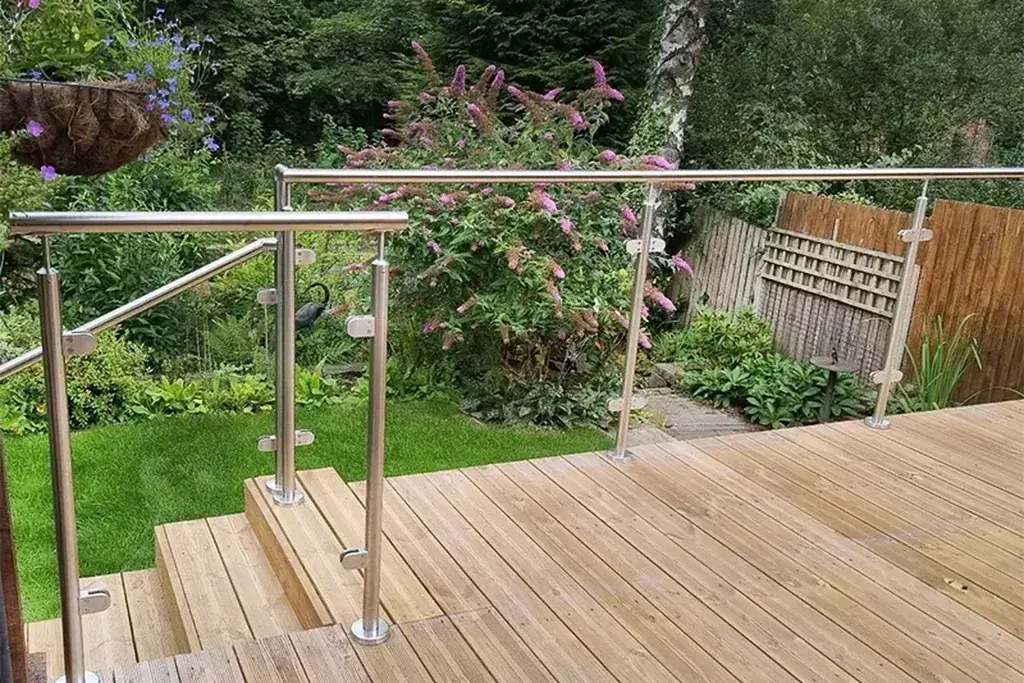
Use a representative assembly sample if the proposal contains mixed materials. Identify every contact path, including screws passing through an isolating pad. An insulating washer at one surface does not necessarily interrupt contact elsewhere in the connection.
Specify how an appearance complaint will be assessed
Agree the normal viewing conditions and the finish reference before an architectural order is released. Brushed direction, weld treatment and reflected surroundings can make adjacent components appear different even when the material grade matches. A distant image and a close inspection answer different questions.
If staining develops, record its location, exposure and cleaning history. Determine whether it is a surface deposit, coating issue or corrosion concern through the appropriate assessment rather than assuming every mark has the same cause. The response should follow the material supplier's permitted process.
Preserve access to sheltered joints when detailing the railing. A finish that can be cleaned on the front face may be difficult to maintain behind a tight decorative cover. Where an appearance standard is important, compare the expected cleaning access and replacement method alongside the original material price, so the owner can realistically maintain the selected finish.
Make cleaning and replacement part of the specification
Ask for the permitted cleaning process, access requirements and response to visible staining or coating damage. Define the appearance acceptance method before ordering a large architectural run. Lighting, viewing distance and surface direction can affect comparisons between polished or brushed components.
Select the material whose complete design meets the exposure and project duty with a maintenance regime the owner can carry out. Continue with dissimilar metals in fence connections for mixed-material interfaces, and steel versus aluminium fencing for the separate mass and section comparison.