
By FencingWise Editorial Team · Updated 17 September 2026.
Divide the boundary by exposure
Record direct spray, prevailing exposure, shelter, drainage, salt accumulation and access for washing. Include the underside of rails, covered joints and locations that rain does not clean effectively.
Distance from the shoreline is useful context, but it should not be used alone to assign a corrosion category or guarantee a service life. Local topography, wind and wetting can materially change exposure.
An illustrative 300 m boundary might be divided as follows:
| Zone | Length | Observed condition to document |
|---|---|---|
| Seaward frontage | 80 m | Direct exposure and frequent salt deposition |
| Sheltered side | 140 m | Reduced rain washing beneath vegetation or structures |
| Inland access side | 80 m | Vehicle contact, gate hardware and routine access |
The lengths total 300 m. Their purpose is to allocate observations and maintenance, not to assign a standard environmental class automatically.
Specify the full corrosion-protection route
Describe the substrate, metallic coating where used, preparation, organic coating products, layer thickness requirements, curing and repair method. Name the applicable specification and its edition where a standard is required.
A two-layer organic powder system and a galvanized-plus-organic system are not necessarily the same construction. State the layers rather than relying on the word “duplex” without explanation.
Coating selection depends on the substrate and preparation route. The selected coating's technical data should support the actual arrangement being offered.
Do not combine the zinc thickness from one system, the powder thickness from another and the test result from a third into a single claimed performance.
Check whether thickness records refer to individual layers
Suppose a hypothetical specification calls for 70 µm of primer and 70 µm of topcoat. The nominal combined organic thickness is 140 µm.
A total reading of 140 µm cannot establish that each layer is 70 µm. A combination of 40 µm primer and 100 µm topcoat gives the same total while failing an assumed primer requirement.
This is a measurement example, not a coastal coating recommendation. The actual layer thicknesses must come from the selected system and its application requirements.
Where metallic and organic layers are both present, specify how they will be distinguished. The zinc-thickness guide explains why a total coating reading can be misleading.
Detail joints and damage-prone areas
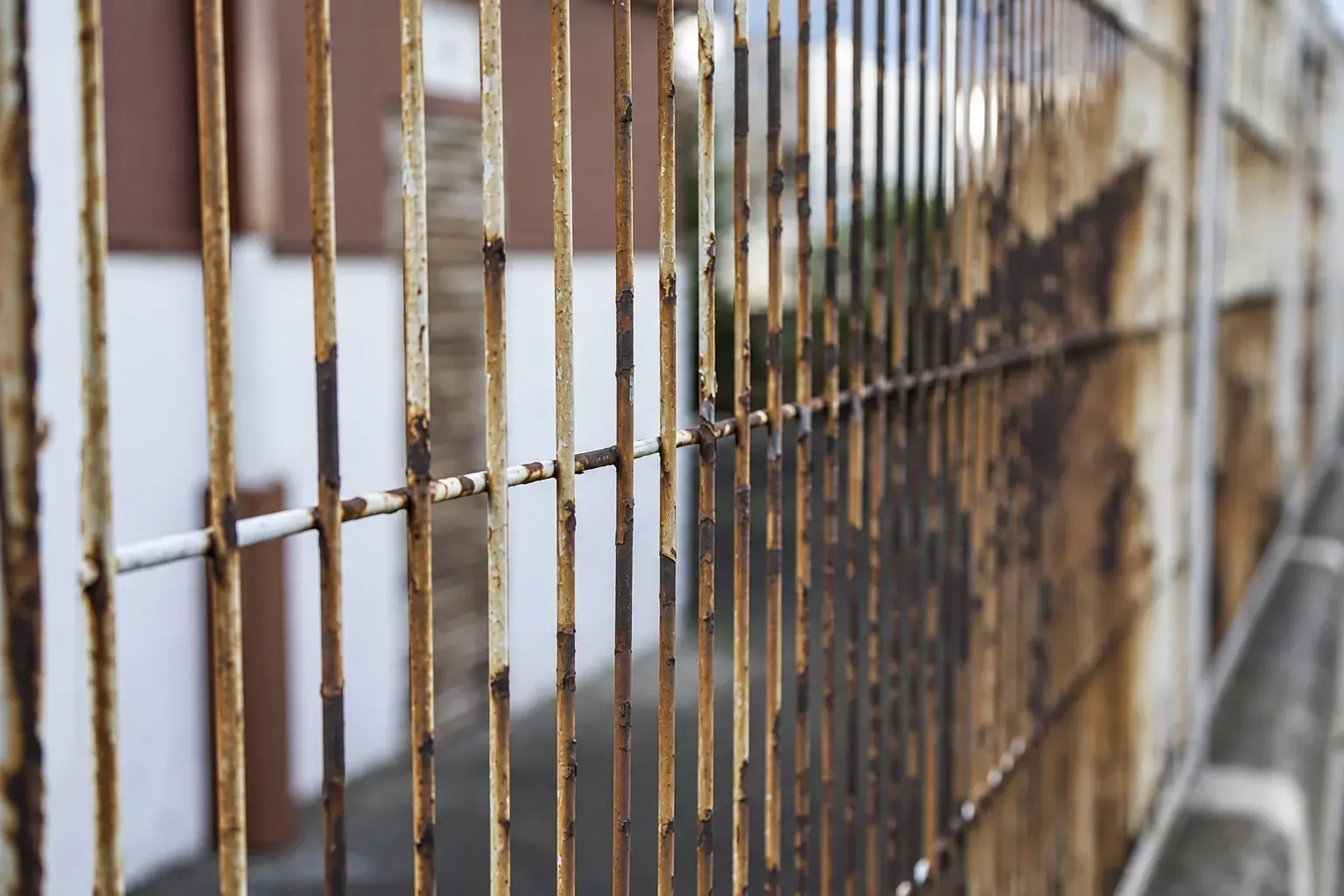
Give particular attention to cut edges, welds, bolt holes, base plates and joints that retain water. Ensure the finishing route covers the actual fabricated parts and that site work does not leave untreated exposed metal.
Different metals at a wet connection may require a compatible isolation detail. Do not add a washer material without checking its mechanical and environmental suitability.
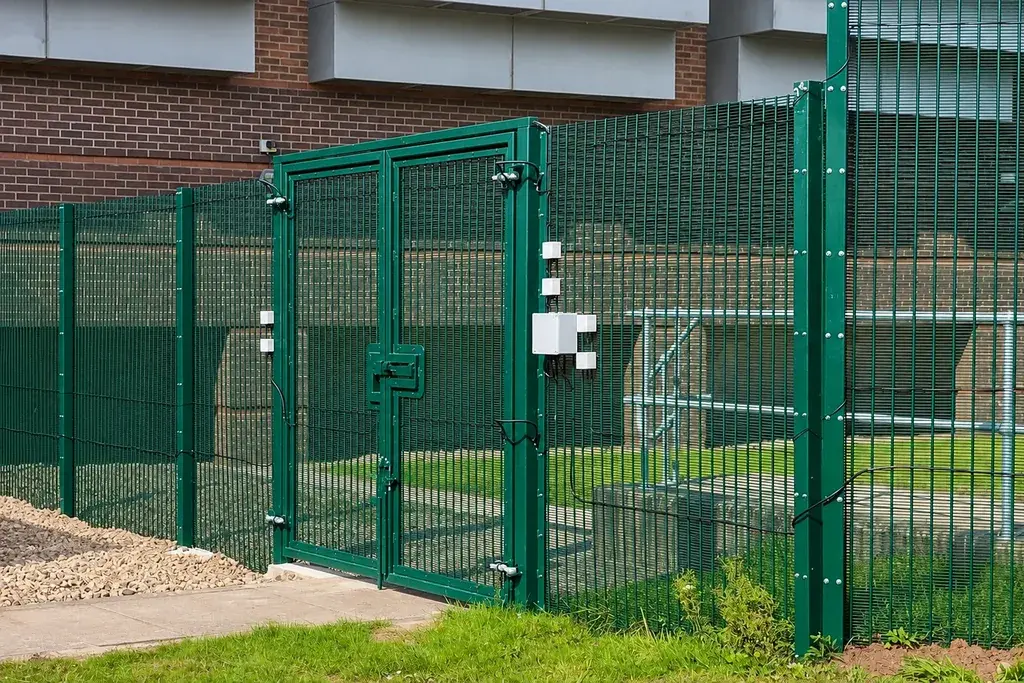
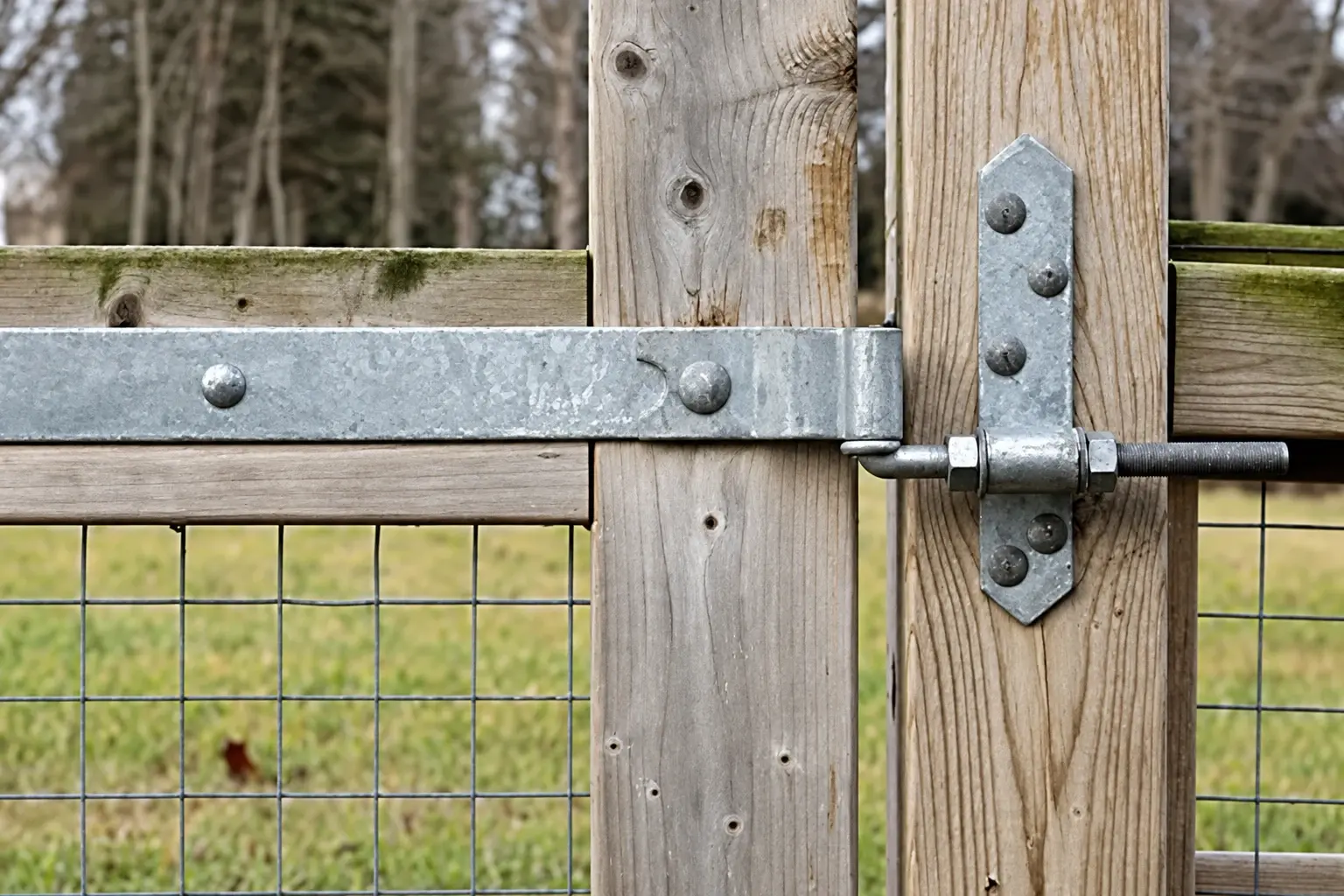
For gates, allow maintenance access to hinges, locks and receivers. A highly protected panel does not eliminate the need to inspect moving hardware or clean a ground socket.
Use drawings to show drainage and access. If a connection is impossible to inspect or repair without dismantling several bays, include that consequence in the system comparison.
Make the cleaning plan achievable
Coating care should follow the selected product's instructions, including compatible cleaning methods and removal of contamination. Set maintenance intervals for the installed finish and exposure conditions.
Estimate access and labour before adopting a schedule. Suppose, for a fictional budget, cleaning 100 m takes 2 worker-hours, and the site plans 4 rounds per year.
For 300 m, the estimate is 3 × 2 × 4 = 24 worker-hours/year. At an assumed £35/hour, labour is £840/year, excluding water, equipment, access and waste handling. These are illustrative inputs, not market prices or a prescribed frequency.
A more durable coating may still need cleaning. Conversely, a cleaning plan that cannot reach the seaward face should not be treated as fully implemented.
Compare offers with a traceable evidence table
For each offer, list the exact layer system, applicable substrate, exposure assumptions, test evidence, maintenance conditions and repair provisions. Record exclusions such as buried sections, standing water or field-cut edges where relevant.
Separate expected maintenance life from a warranty. A warranty may have conditions and exclusions that do not match the site's operating plan.
Before release, check representative fabricated details and retain the coating records by production lot. During operation, photograph recurring defects by zone. The blistering and rust investigation guide can help determine whether a local repair, a process investigation or a wider replacement review is needed.