
Label the purpose of each line
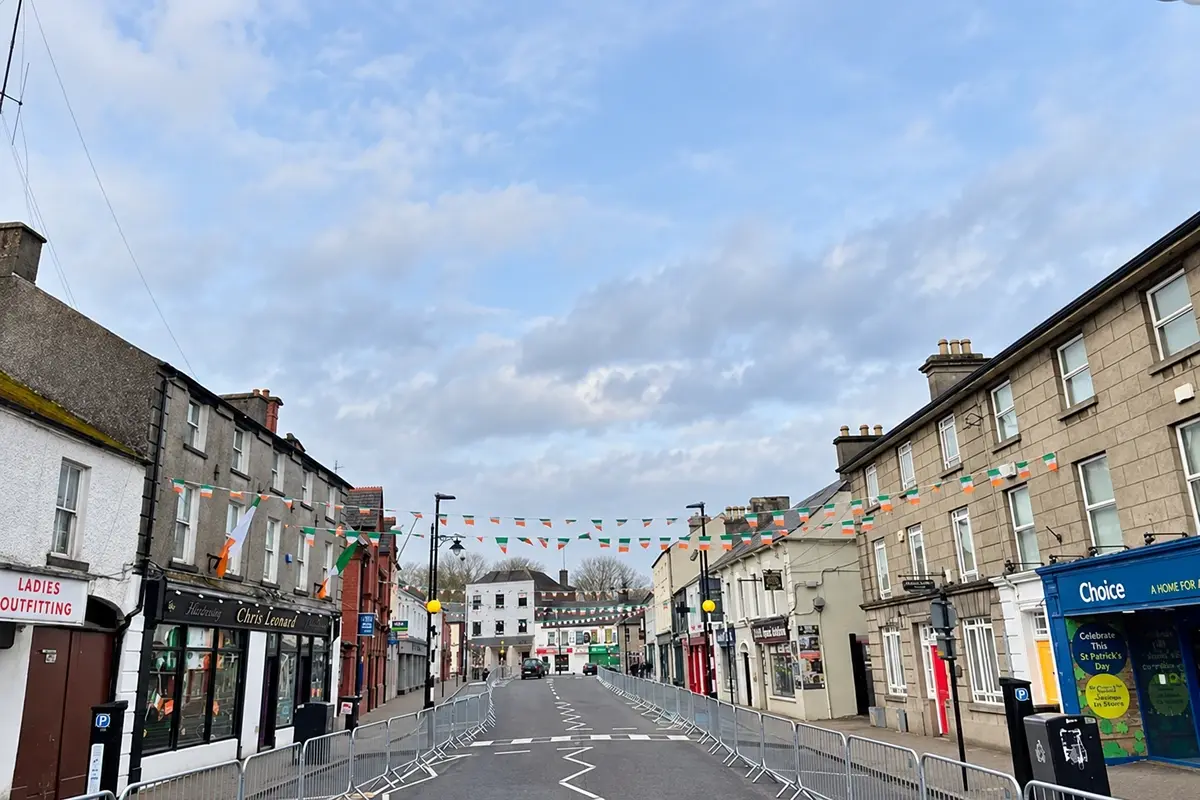
Use clear descriptions such as queue guidance, restricted-area boundary, stage-front protection or vehicle mitigation. These descriptions should appear on the layout and quotation. Calling everything crowd control can hide substantial differences in design and evidence.
HSE distinguishes the functions barriers perform and highlights wind and crowd pressure in selection. Specialist stage-barrier arrangements require appropriate competence. HSE: using barriers at events.
| Intended duty | Main question before selection |
|---|---|
| Pedestrian guidance | Will the layout guide people without creating a new obstruction? |
| Restricted perimeter | What access control and security duty is required? |
| Crowd-pressure management | Is the specific barrier arrangement suitable for the assessed loading? |
| Vehicle protection | Does the identified system have appropriate impact evidence? |
The same appearance does not mean the same duty. A heavier frame or a taller panel should not be treated as a substitute for the relevant assessment.
Review both sides of the barrier
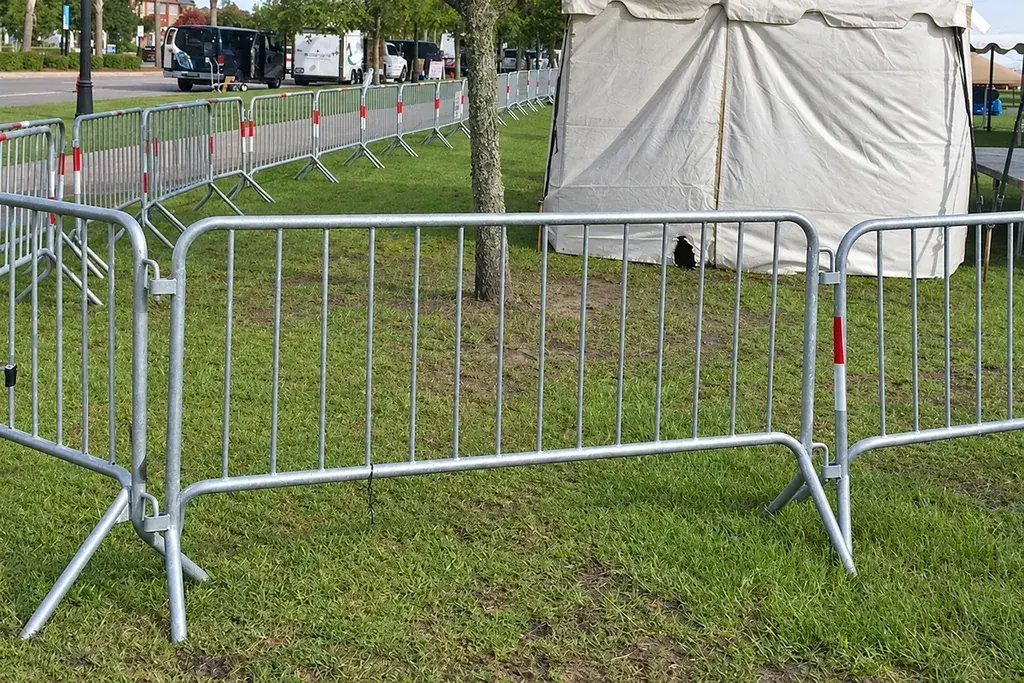
Show where people stand, where staff operate and where evacuation or rescue access is needed. A barrier line that works for arrival can create a bottleneck during departure. Ground changes and projecting feet can reduce the usable route width.
For an illustrative walkway 3.0 m wide, suppose a support projects 0.25 m into the route from each side. The geometric unobstructed width becomes 3.0 − 0.25 − 0.25 = 2.5 m. That arithmetic does not establish an acceptable crowd capacity; it identifies the width the responsible planner must actually assess.
Do not calculate people-per-minute capacity from the nominal distance between panel faces when the supports occupy part of that space.
Count connections and breaks in the line
A continuous line may need controlled openings for staff or emergency use. Each break changes both operation and the connection arrangement. Mark it on the drawing and state who can open it, how it is secured and how it is restored.
An illustrative line of 20 barriers has 19 shared junctions. If it is divided into four independent five-barrier lines, it has 16 shared junctions and eight exposed ends. The lower junction count does not mean the layout is simpler: those exposed ends can need different positioning and management.
Use the actual manufacturer's connection system and the assessed layout. Do not tie incompatible barriers together and assume that a continuous visual line establishes continuity of performance.
Keep event operation with the equipment schedule
Record expected use, deployment hours, stewarding interfaces and changes between event phases. A delivery compound, public queue and performance area may need different arrangements even if the same contractor supplies them.
Inspection should cover both equipment condition and the layout. A serviceable barrier can be placed where it creates a trapping or obstruction problem. Conversely, a correct layout does not excuse damaged connections.
Review the transition from a queue to an open space
The end of a guided queue can be more important than the straight barrier line. Show where people leave the channel, where staff check tickets or direct them, and whether another route crosses that point. A narrow release into a busy circulation area needs assessment as part of the crowd plan.
Identify the barrier ends and any permitted openings clearly. Do not add a last-minute return merely to make the line look tidy; it can change the movement pattern or create a confined pocket. The responsible planner should review the altered layout before it is used.
During operation, record conditions that differ from the plan, such as an unexpected queue direction or an obstructed exit from the channel. Equipment selection and stewarding should be considered together. Repositioning a barrier may be an appropriate planned action, but it should follow an authorised arrangement that preserves the intended route and access.
Select evidence for the claimed function
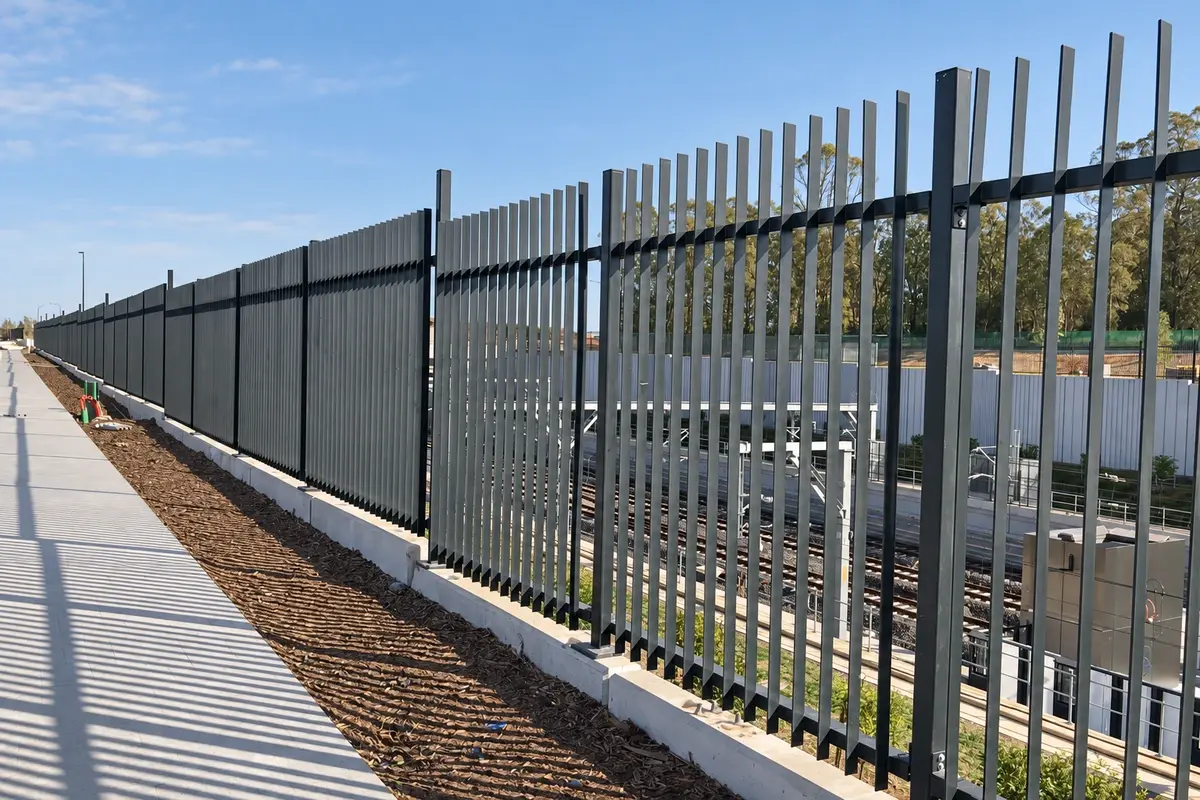
For an ordinary pedestrian guide barrier, do not add an unsupported crash or crowd-pressure rating. For a specialist rated system, obtain the exact model, configuration and limitations behind the claim. Keep those details with the installation record.
See crowd barrier feet and connections for the hardware comparison and festival planning inputs for the event-wide drawing. The useful purchase is equipment matched to a defined duty, with an operating arrangement that preserves that duty throughout the event.