
Build one base plan and three operating overlays
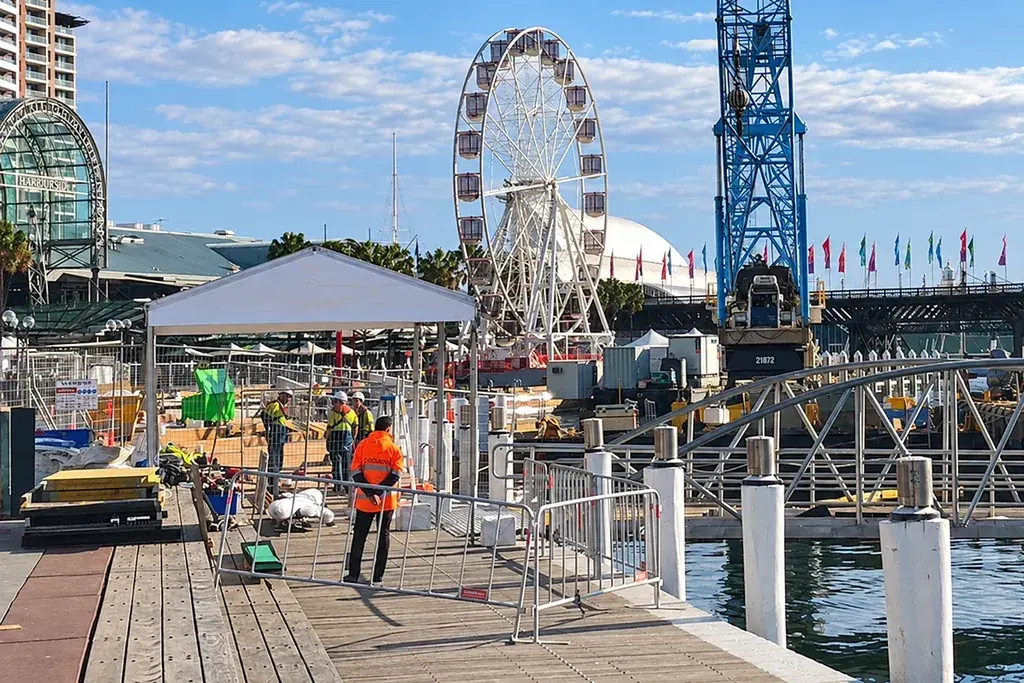
The base plan should show terrain, structures, services, existing boundaries and access constraints. Add separate overlays for build and breakdown, public operation, and the planned departure arrangement. More phases may be necessary for a complex event.
HSE's venue guidance calls for a referenced plan showing fencing, entrances, exits and other facilities. Its crowd guidance also treats arrival, circulation and departure as distinct considerations. HSE: venue and site design, HSE: crowd controls.
The overlays should identify which barriers move, who controls the change and when the revised arrangement is checked. Avoid issuing three disconnected drawings with no record of how one becomes the next.
| Phase | Boundary questions to resolve |
|---|---|
| Build and breakdown | Delivery access, work-zone separation and stored equipment |
| Public operation | Queue routes, restricted areas and supervised openings |
| Departure | Exit operation, route changes and staff deployment |
Give every barrier line a duty
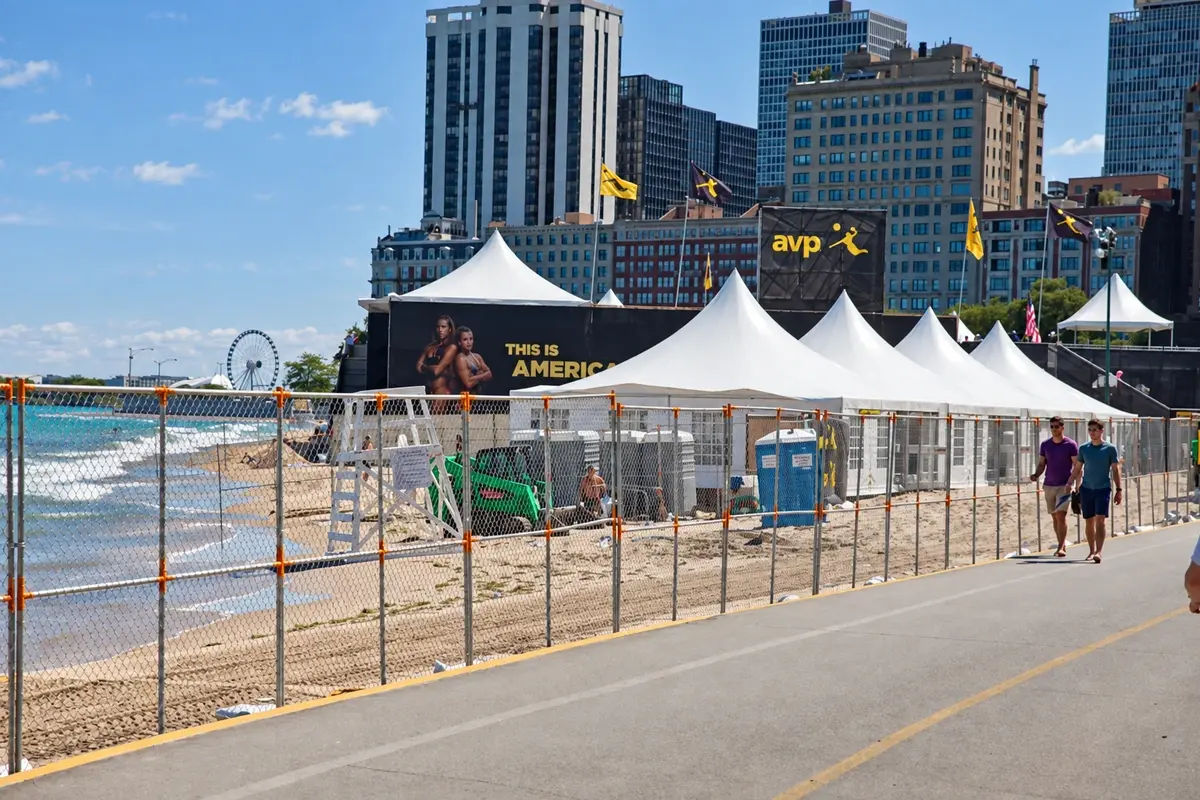
Distinguish perimeter security, pedestrian guidance, specialist crowd-pressure barriers and vehicle protection. These require different selection decisions. Do not substitute ordinary guide barriers where the plan requires a specialist arrangement.
Number each line and opening. For every gate, identify its normal state, permitted users and the responsible operating team. Coordinate emergency arrangements with the competent event planner; a fencing quantity sheet cannot determine the event's capacity or evacuation provision.
Mark the full support footprint. Feet and braces that are acceptable during build-up may obstruct a public route once the event opens.
Reconcile inventory across phases
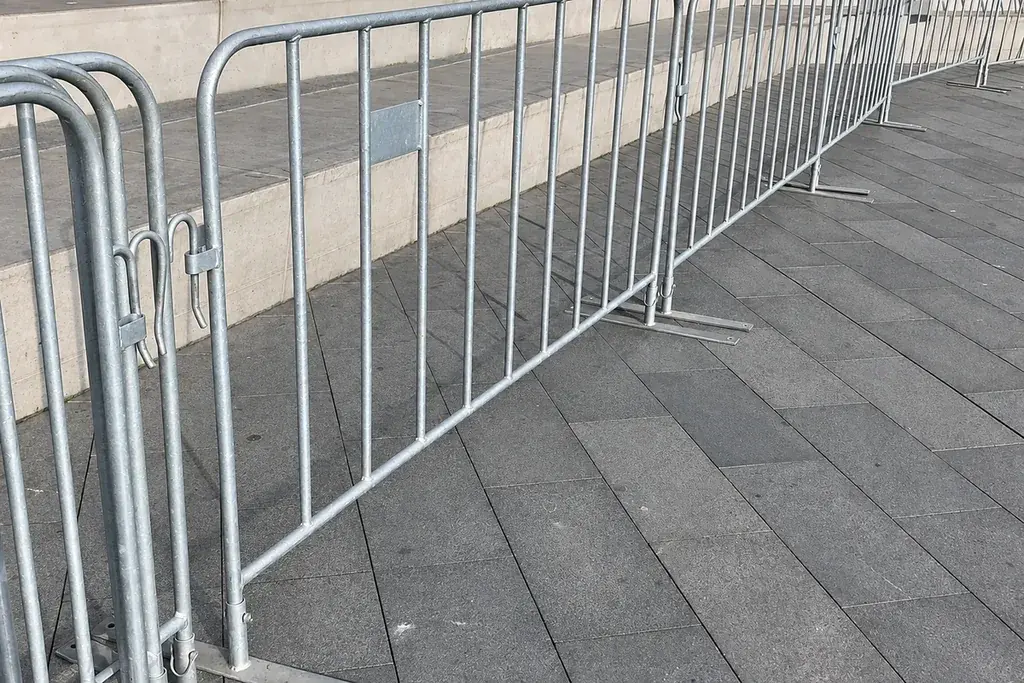
Consider an illustrative event with 120 barrier units available. During build-up, 70 are deployed and 50 remain in a controlled storage area. During public operation, the plan needs 100. Moving 30 from storage leaves 20 unused, assuming all units remain serviceable and compatible.
If ten deployed units are then reassigned to a departure route, record the line from which they are removed and whether that line may be shortened. Do not simply add a departure requirement to the schedule and assume equipment can be borrowed from another live boundary.
| Inventory status | Illustrative public-operation count |
|---|---|
| Deployed in approved lines | 100 |
| Available serviceable reserve | 16 |
| Isolated for assessment | 4 |
| Total owned or hired units | 120 |
The four isolated units are not usable reserve. This distinction prevents a nominal stock total from concealing a shortage during a changeover.
Control the changeover between operating phases
Prepare a short changeover instruction that identifies the outgoing layout, incoming layout, affected equipment and responsible teams. State which routes must remain controlled while barriers move and when the revised arrangement is inspected. The changeover is an operation in its own right, not a gap between two finished drawings.
Keep unavailable or damaged equipment out of the changeover allocation. If the reserve is used elsewhere, update the plan before the next phase depends on it. An equipment total that was correct during build-up can become misleading after repairs, losses or unrecorded moves.
At the handover between contractor and event staff, walk the significant openings and specialist barrier areas together. Identify which parts staff may operate and which changes require the appropriate contractor or planner. This reduces the risk that an apparently helpful last-minute adjustment changes the assessed layout or removes access needed by another operational team.
Specify the information handover, not just delivery time
The fencing contractor needs the current layout, component schedule, access constraints and installation sequence. Event operations need the accepted layout, opening references, inspection arrangements and change-control contacts. Both should use the same revision.
Agree how additional signs, banners or screening are authorised. Branding applied after installation can change wind exposure and obscure sightlines. The change should return to the relevant reviewer before it appears on the fence.
Use temporary fence wind documentation for the support assumptions and crowd barriers versus security fences for the equipment roles. A complete event brief connects those technical decisions to the people who deploy, inspect and operate the boundary.