
Establish what happened and where
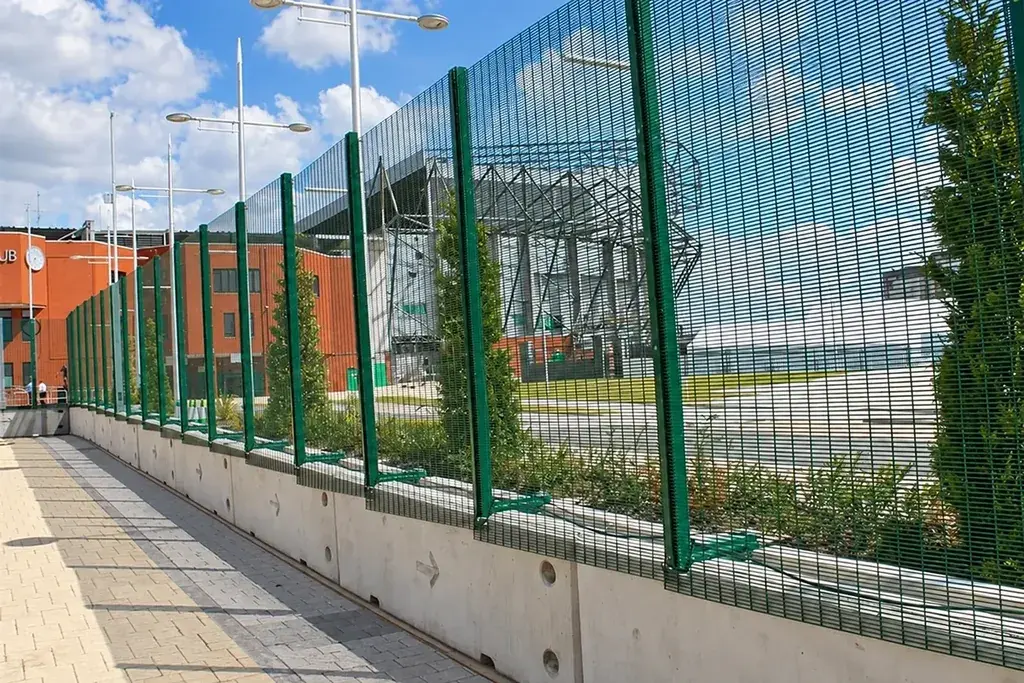
Record the event, time, affected boundary segments and any immediate change in operation. Photograph from a safe position and identify panels, posts and gates on the layout. Where there may be electrical equipment, overhead lines or other hazards, follow the site's emergency arrangements and involve the relevant responsible people.
Avoid pushing, climbing or opening a damaged assembly to see whether it still works. Such actions can change the condition or expose people to a collapse or uncontrolled movement.
The purpose of an initial walkover is to locate and describe concerns. Structural adequacy and repair decisions may require a competent specialist.
Follow the load path through the affected area
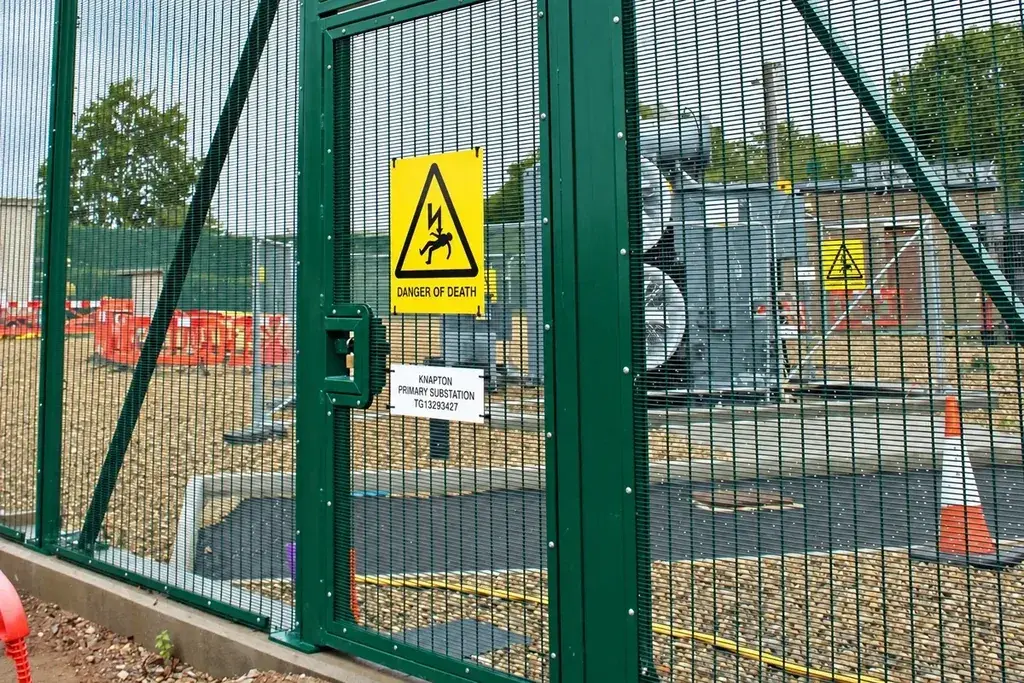
| Location | What to record |
|---|---|
| Infill | Distortion, broken connections, sharp damage or displaced netting |
| Panel-to-post joint | Missing, moved or visibly damaged components |
| Post | Lean, bending, cracking or change from the baseline |
| Base and ground | Movement, erosion, cracking or disturbed bearing |
| Gate | Alignment, supports and safe control of movement |
| Adjacent bays | Signs that damage extends beyond the impact point |
A local strike can affect adjoining components. Compare the damaged area with the accepted layout and, where available, baseline photographs or measurements.
Measure change without inventing a pass limit
For an illustrative survey, a 2,000 mm reference height shows a lateral displacement of 40 mm from its original vertical line. The geometric ratio is 40 / 2,000 = 2%, corresponding to an angle of approximately arctan(0.02) = 1.15°.
This calculation describes the observed geometry. It does not establish that a 2% lean is safe or unsafe for every fence. Record the datum, measuring method and whether a baseline exists, then compare the result with the applicable design and assessment criteria.
If the post was already out of line before the event, the new measurement alone cannot quantify the event's effect. Preserve that uncertainty rather than presenting an unsupported diagnosis.
Separate immediate controls from permanent repair
The site may need to close or divert an affected route while the assembly is assessed. Record those controls and who is responsible for maintaining them. A temporary prop or replacement panel should not be improvised as a permanent repair.
Obtain a repair or replacement decision for damaged structural or safety-critical components. Identify the required parts, any inspection after repair and the criteria for returning the area to use.
For powered gates, HSE's guidance emphasises the complete installation and foreseeable deterioration or environmental effects. A damaged gate should be assessed by an appropriately competent person before operation resumes. HSE: powered gate safety.
Preserve evidence before dismantling damaged parts
Where it is safe and appropriate, record the component identities, positions and visible connections before removal. Dismantling can erase evidence of how the assembly moved or where a connection failed. Follow the site's incident and insurer procedures where they apply, while prioritising control of the immediate hazard.
Keep removed parts identified if they are required for assessment. Do not mix them with ordinary scrap before the responsible parties have decided what needs retaining. Photographs should include a location reference and enough surrounding detail to explain the component's original position.
The repair schedule should distinguish replacement in kind from a revised design. If the original arrangement is changed, update the relevant drawings and maintenance records after approval. A new panel or post can look like the original while using different connections, so the return-to-service record should identify the actual components and assessment on which the decision relies.
Close the record on the physical installation
Suppose five defect records are opened after an event. Three receive completed and verified repairs; one awaits a replacement part and one awaits assessment. Two remain open. A purchase order for the replacement part does not close its defect.
Retain the inspection result, repair detail, replacement identities and return-to-service authorisation. Update the baseline where a new approved component or layout is installed.
Use temporary fence inspection records for relocatable boundaries and drawing coordination when a support detail needs review. The objective is a documented decision about the actual damaged assembly, not a generic statement that the fence has been checked.