
By FencingWise Editorial Team · Updated 17 September 2026.
What the profile changes
Forming a V-shaped bend adds depth to the mesh. The profile changes the panel's geometry and can contribute to rigidity, but its effect depends on the complete panel design. Bend depth, position, wire dimensions and the way the panel is supported all matter.
Flat mesh provides a continuous unprofiled face. Its fixing detail may use panel overlap and a clamp bar, while a profiled system may use clips arranged to suit the bends. Those are examples of system details, not a rule that every flat or profiled panel uses the same fasteners.
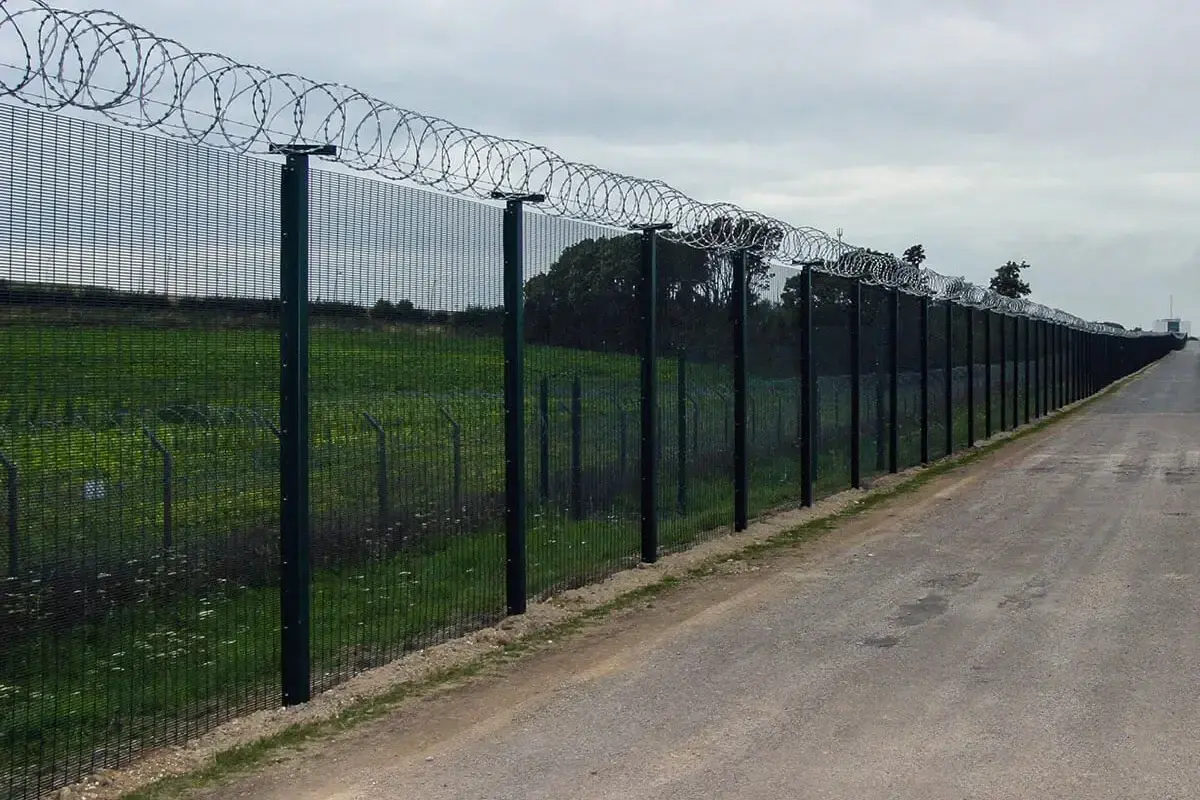
| Detail | Flat panel | Profiled panel |
|---|---|---|
| Face | Unprofiled plane | Bends project from the main face |
| Connection information | Edge position, overlap and clamp arrangement | Profile position, depth and matching fixing geometry |
| Replacement check | Width and edge fit against the existing posts | Those dimensions plus clearance around the formed areas |
| Drawing requirement | Overall dimensions and wire layout | Overall dimensions, wire layout and a profile section |
When each form belongs on the shortlist
A flat panel is the natural starting point where the design specifies an unprofiled face and a defined full-edge connection. A profiled panel belongs on the shortlist where the design deliberately uses formed mesh and matching posts or clips.
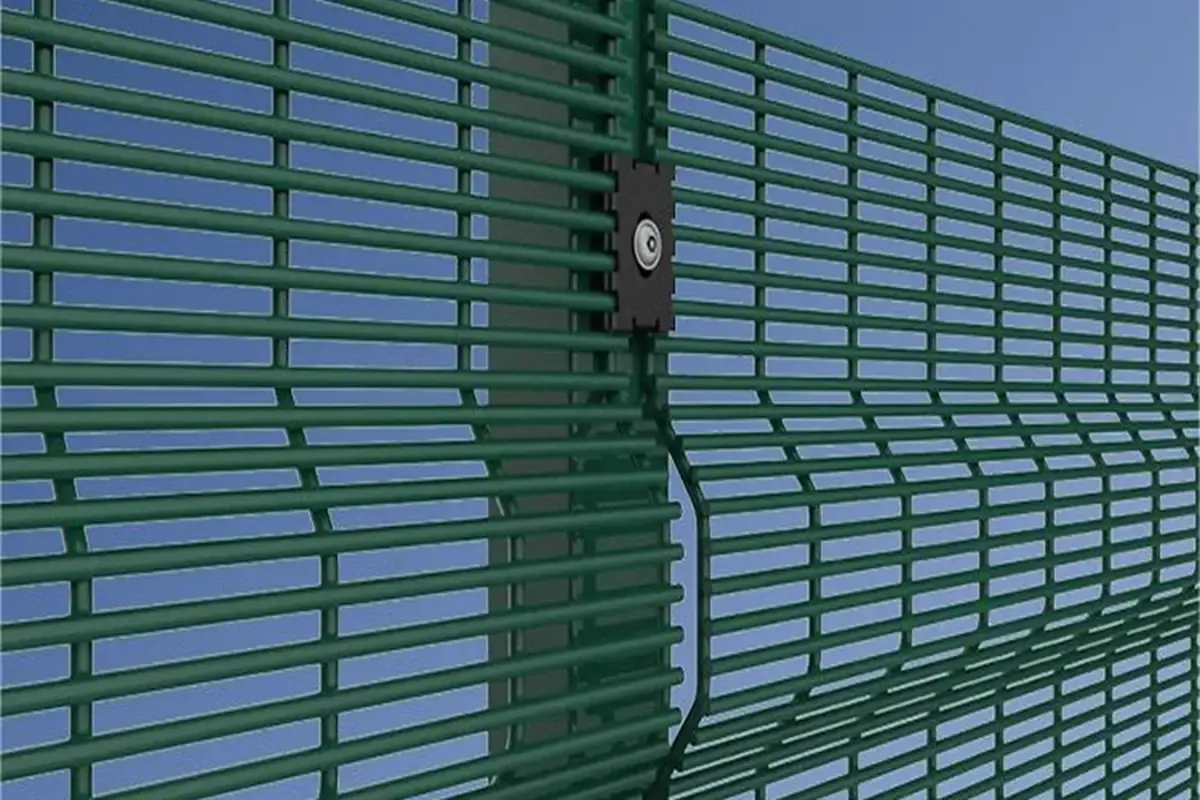
For an extension to an existing fence, retaining the original system geometry may be more useful than switching panel form. For a new boundary, assess the proposed complete arrangements against the site brief and any required evidence. Neither bend count nor flatness proves a security rating.
A replacement can fit the height and still miss the posts
Imagine replacing a flat panel with a profiled panel of the same nominal height and width. The bend may meet an existing bracket before the panel edge reaches its seat. Alternatively, the new connection may need a different overlap, altering the effective bay dimension.
That is why photographs should show the panel-to-post joint as well as the whole fence. The panel width and post layout guide explains how panel dimensions relate to the installed bay.
Keep the comparison specific
A useful comparison places two drawings beside each other and identifies which parts change: panels only, panels and clips, or panels, posts and adjoining gate details. On sloping ground, include the transition between levels and the resulting bottom gap.
Use the flat 358 panel and profiled 358 panel pages to define the enquiry. Height, coating, quantities and required performance should remain visible in both options; a different connection should not disappear inside a single price per panel.