
By FencingWise Editorial Team · Updated 17 September 2026.
The hinge connection changes the demand
A swing leaf's weight acts away from the post. The hinge assembly transfers that weight and the associated turning effect into the post and its foundation. Increasing the leaf width changes the leverage even if its height remains the same.
Opening, stopping and securing the leaf introduce further actions. Wind on the infill can matter in both open and closed positions. A solid panel added to an originally open-mesh gate changes that exposure, as well as potentially changing the leaf mass.
These are reasons for assessing the assembly, not a formula for choosing a post from a catalogue.
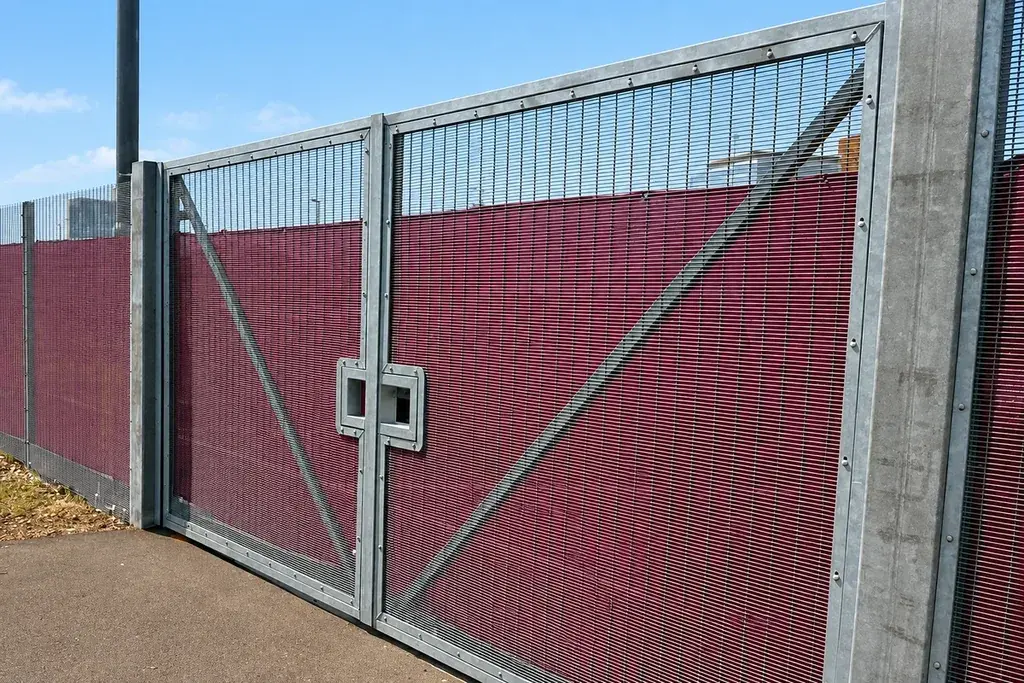
Hinge, catch and line positions are different
| Position | Main interface to examine |
|---|---|
| Line post | Panel connections on the adjoining bays |
| Hinge post | Hinge spacing, attachment and gate-leaf support |
| Catch post | Latch or receiver position and the closed-gate detail |
| Shared gate/fence post | Gate hardware plus the returning fence connection |
| Sliding-gate support | Guides, carriage or track-related detail for that system |
A double-leaf gate can have two hinge posts and a central meeting arrangement rather than a separate catch post. Counting every gate as “two ordinary posts” conceals those differences.
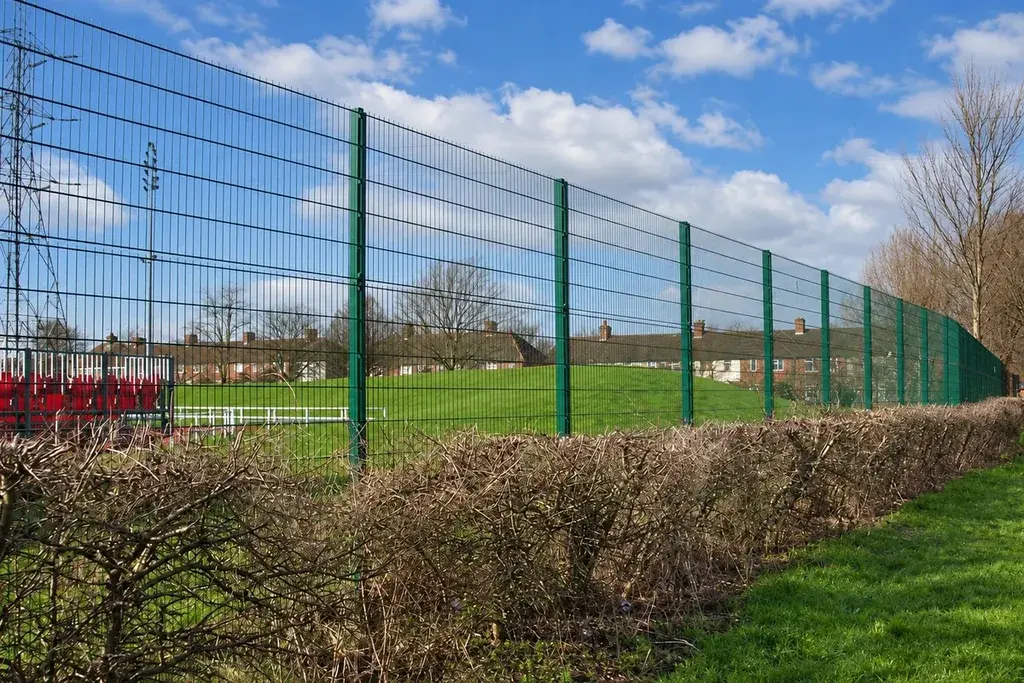
Outside dimensions do not describe the whole section
Wall thickness, material, internal or local reinforcement, welds and fixing positions can differ within the same nominal post size. The base connection and foundation also affect how the assembly behaves.
A stronger-looking post does not compensate for an unsuitable anchor or foundation. Conversely, a larger post selected without the connection drawing may leave the hinge holes or fence brackets in the wrong position.
Reusing an existing post needs more than a photograph
Useful records include the post section and wall thickness, its condition, the hinge and bracket details, and whatever is known about its base and foundation. The proposed leaf dimensions, mass and operation then give the designer a basis for assessment.
Where the foundation or section is unknown, record that uncertainty explicitly. Do not substitute an assumed embedment depth or anchor arrangement simply to complete the drawing.
Order by function and reference
Separate hinge posts, catch posts and fence posts in the component schedule, even when their finishes match. Include the gate drawing revision and identify any shared connection back into the fence.
The post section guide explains section and fixing compatibility. The gate drawing review brings the posts, leaves and hardware together for the final material definition.