
Look at how the infill reaches the frame
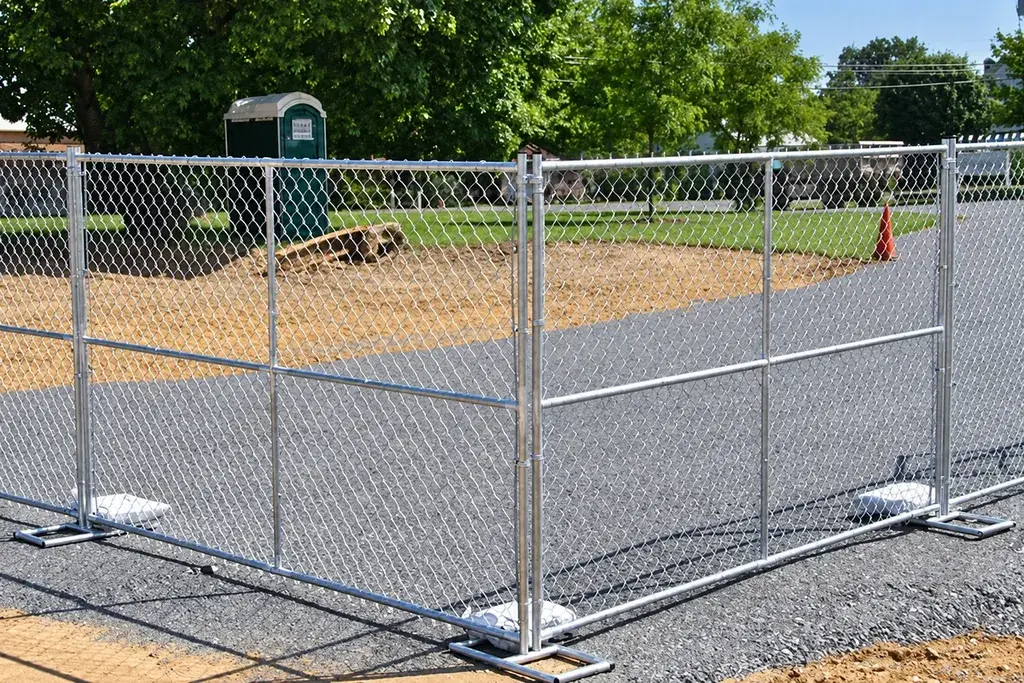
Welded mesh has fixed intersections within its grid. Chain link uses interwoven wire, with its edges and attachment controlling how it is retained in the frame. Examine the actual proposed panel: infill tension, ties or welds, edge treatment and frame joints all matter.
Do not assume a welded grid is always harder to breach or that chain link always survives handling better. These conclusions depend on wire, openings, attachments and the complete construction. A security claim needs appropriate evidence for the supplied assembly.
| Inspection point | Welded mesh panel | Chain-link panel |
|---|---|---|
| Infill condition | Broken intersections, distortion and cut ends | Loose fabric, damaged ties and displaced edges |
| Frame connection | Weld or other retention detail | Tension and edge-retention detail |
| Repair decision | Approved mesh or panel replacement method | Approved fabric and attachment replacement method |
| Storage contact | Protect grid and coating from local pressure | Avoid snagging and distortion of fabric or ties |
The table is an inspection framework. It does not prescribe a repair technique for a product that has not been identified.
Compare the same assembled footprint
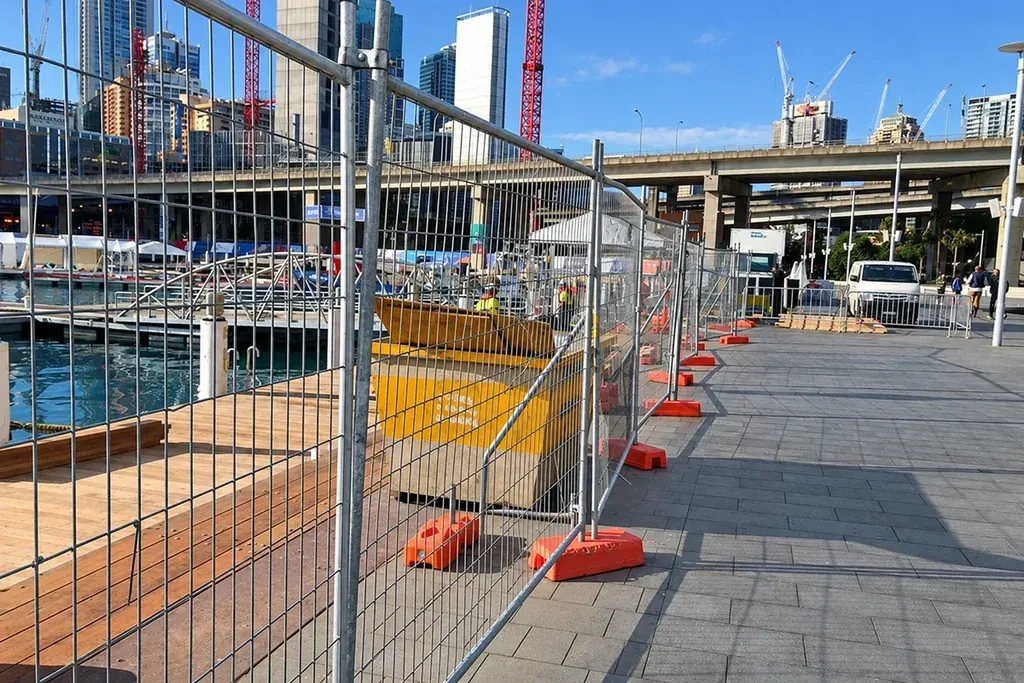
Set the required installed height, module length and support configuration before comparing a price per panel. A wider panel may reduce the number of modules but create a different handling or wind condition. A lighter panel may still require the same engineered ballast arrangement.
Suppose an illustrative run is 70 m long. A 3.5 m installed module gives 20 panels; a 2.5 m module gives 28. If both arrangements use two connection sets at each shared junction, the open straight runs need 38 and 54 junction sets respectively, excluding special ends and gates.
Those counts follow the assumed detail. They do not demonstrate that either support configuration is suitable, or that the same coupling can be used on both frames.
Separate panel mass from handling effort
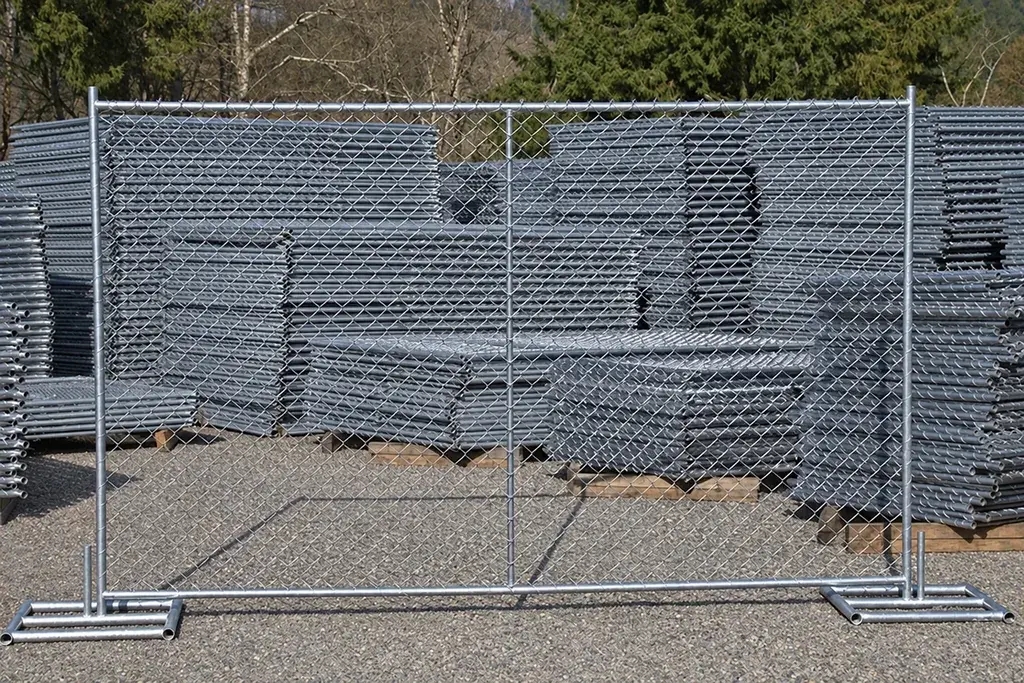
For an illustrative packing comparison, 40 panels at 18 kg total 720 kg; 40 panels at 22 kg total 880 kg. The 160 kg difference affects the shipment, but panel size, grip, wind and unloading access also affect handling.
Request packed dimensions and actual finished mass. A loose sample can omit feet, couplers or projecting hooks that determine the stack footprint. Compare the handling method for the complete pack, including how the first panel is removed without destabilising the remainder.
Test the maintenance workflow
Ask the supplier how a damaged infill is identified and what replacement unit is available. For a hire fleet, give each panel or pack a traceable reference and separate serviceable, repairable and rejected items. Do not return damaged panels to stock simply because the frame can still stand upright.
A practical receiving trial is to assemble two finished panels with the specified feet and couplers, inspect the joint and then pack them using the proposed separators. This reveals fit and handling issues without turning the trial into an unsupported performance test.
Compare repair units for a hire fleet
Ask what can be replaced as an identified component and what requires removal of the complete panel from service. A fabric repair, replacement infill or frame repair should follow an approved method for the actual construction. Do not assume that a workshop process suitable for one panel family applies to another.
Record the time and parts involved in the proposed repair route during a representative assessment. Keep inspection and transport time visible as well as the repair activity itself. This helps a fleet operator compare practical turnaround rather than only the cost of replacement wire.
At stock issue, identify compatible panels and connections together. Mixed frames with slightly different tube or coupling geometry can cause installation difficulties even where both use chain link or both use welded mesh. A consistent identification system makes the chosen construction easier to maintain and reduces the temptation to force a near-fitting component into service.
Decide using the expected service cycle
Frequent moves increase the importance of repeatable connections, storage and repair access. A longer static installation may put more emphasis on the fixed layout and inspection regime. Choose the panel construction that meets the actual duty and can be maintained with identified parts.
Review temporary welded mesh fencing and temporary chain-link fencing with the same schedule. For the broader choice between a relocatable system and a fixed installation, see temporary versus permanent fencing.