
By FencingWise Editorial Team · Updated 17 September 2026.
A useful cost review explains what changed and what the buyer receives as a result.
Start with a common layout and scope
Hold fence length, height, access openings and required function constant. Identify which components and services each offer includes: panels, post types, fittings, gates, finish, packing, inspection and the agreed delivery basis.
If one offer omits gate hardware or uses a different run layout, it is not yet an equal-scope comparison. Mark that difference before considering which panel costs less.
The price-unit comparison explains how to normalise a panel price and a per-metre price. This article examines why the underlying costs change.

Quantify the effect of wire diameter
For the same steel density and wire length, bare-wire mass varies with the square of diameter. Moving from 4 mm to 5 mm wire gives:
5² ÷ 4² = 25 ÷ 16 = 1.5625.
Under those equal assumptions, the 5 mm wire has 56.25% more bare-steel mass. It does not follow that the finished fence price or strength rises by 56.25%.
Wire count, panel height, profile, welding, coating, posts and freight can all change the total. Use the calculation to identify a material driver, then ask how that driver appears in the quoted item.
A finished coated diameter should not be inserted into a bare-steel formula. The weight calculation guide separates those measurement bases.
Count the effect of shorter bays
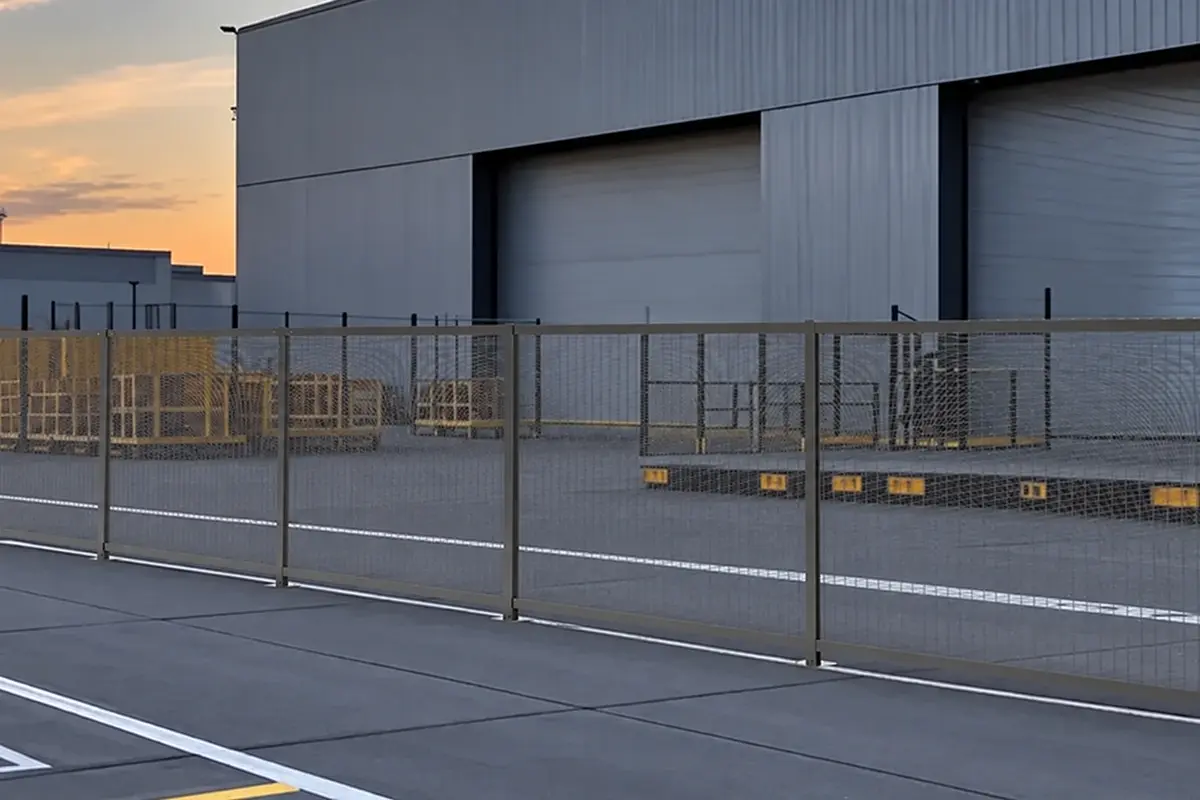
Assume a fictional straight 60 m run, measured between terminal post centres. Compare two already-approved layout options, with no gates or corners:
| Layout | Bay count | Posts in the open run |
|---|---|---|
| 2.5 m installed bays | 60 ÷ 2.5 = 24 | 25 |
| 2.0 m installed bays | 60 ÷ 2.0 = 30 | 31 |
The shorter-bay option adds 6 panels and 6 posts. It also changes the fittings count, handling and potentially installation work.
These spacings are arithmetic assumptions, not structural recommendations. A lower price per smaller panel may still lead to a higher total package price because more panels and supports are needed.
When the route does not divide exactly, closing bays introduce another cost. Count them explicitly rather than assuming a percentage of offcuts will solve the geometry.
Separate fabrication from finishing
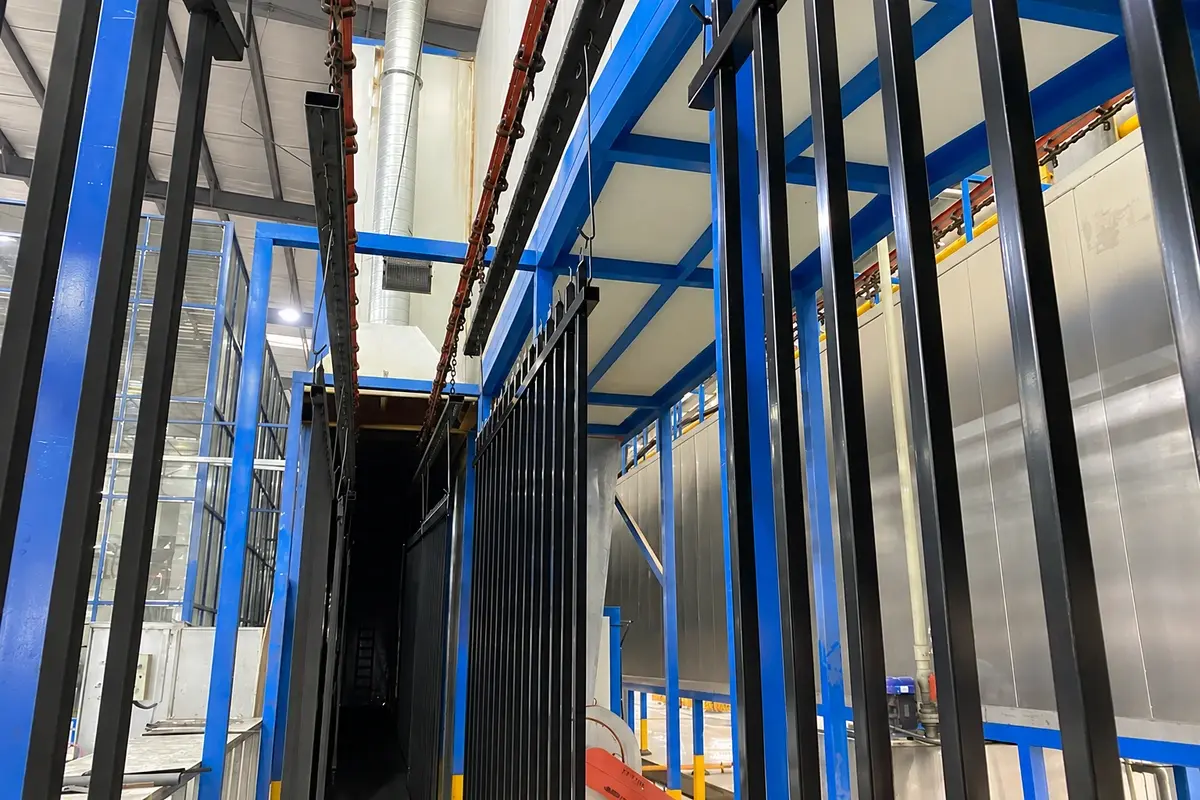
A gate frame, a formed panel and a flat panel require different fabrication tasks. Profile forming, special edge details, non-standard hole patterns and trial assemblies can alter the work even if their steel weights are similar.
Finish is another independent variable. Pre-coated material, treatment after fabrication and a combined zinc/powder system have different process and inspection requirements. The specification should identify which route is priced for each component.
Avoid assigning an unsupported universal premium to a process. The actual quantity, dimensions, batch arrangement and required finish determine the supplier's quote. A percentage copied from another factory or year is not a reliable estimate for the present order.
Compare inspection and evidence on equal terms
One quotation may include only routine checks while another includes independent inspection attendance, additional testing or specified reports. Those are different deliverables.
List the required evidence before comparing totals. If a test is essential for product approval, a quotation that excludes it cannot be treated as a cheaper equivalent simply because the omission is in small print.
At the same time, avoid buying unnecessary duplicate checks. Identify the purpose of each document or test and whether existing valid evidence covers the requirement. The third-party inspection article helps define the scope.
Work through a fictional package comparison
Assume two offers meet the same approved technical requirement and delivery scope. The following invented amounts illustrate the calculation only; they are not market prices or FencingWise quotations.
| Cost line | Offer A | Offer B |
|---|---|---|
| Panels | £2,400 | £2,250 |
| Posts and complete fittings | £1,200 | £1,450 |
| Agreed packing and inspection | £300 | £300 |
| Comparable material package | £3,900 | £4,000 |
Offer B's panel line is £150 lower, but its posts and fittings are £250 higher. The complete package is therefore £100 higher, or approximately 2.56% above Offer A.
If the panel or post specifications differ, keep those differences beside the numbers. The calculation alone cannot establish equivalent suitability.
Check packing and order composition
A mixed order with many heights, colours or unique gates can need more sorting, labels and separate packs than a repeated item. Package dimensions and weights can also affect the transport plan.
That does not mean every mixed order has a fixed surcharge. Ask the supplier to identify the actual effect: additional packing work, different pallet arrangement or a changed dispatch sequence.
Review whether a small change in product dimensions creates a disproportionately different packing arrangement. The relevant evidence is the proposed package plan and quotation, not a generic number of panels per container.
Reduce cost without hiding the trade-off
Useful cost discussions can consider standardising compatible parts, reducing unnecessary variants, resolving drawings before production and avoiding duplicated scope. Any proposed specification reduction should remain visible and receive the appropriate approval.
Record each alternative with its saving, changed components and consequence. “Option B saves £100 by omitting the required test” is a different decision from “Option B saves £100 with the same agreed package”.
A clear cost review ends with an identifiable order scope. It lets the buyer explain the decision internally without relying on a low unit price that later grows through missing components.