
By FencingWise Editorial Team · Updated 17 September 2026.
Build the sheet around controlled fields, then link it to drawings and compatible components.
Give the item a stable identity
Use a unique product or SKU code and a revision. Keep the commercial description readable, but do not make it the only identifier.
Distinguish a sellable item from an assembly. A panel SKU may represent one bare panel, while a kit SKU includes a panel and defined fixings. If both share the same name in the warehouse, a picker can issue the wrong contents even when the stock count appears correct.
Record the supplier's code alongside your own code. When the supplier changes, retain the importer code only if the controlled requirements and compatibility are actually maintained.

Define the dimensions rather than listing numbers
Each critical number needs a unit and a measuring basis. For mesh, distinguish wire centres from clear openings and core wire from finished coated diameter. For panel width, identify the physical references and keep installed bay spacing separate.
An illustrative panel sheet might include:
| Field | Fictional controlled entry |
|---|---|
| Importer code | FW-DW-01 |
| Revision | C |
| Supply unit | One finished panel, fixings excluded |
| Form | Flat twin-wire |
| Wire arrangement | 6/5/6 mm nominal steel-wire reference |
| Overall width | 2,410 mm, reference edges shown on drawing |
| Overall height | 2,000 mm, wire-tip references shown |
| Mesh | 50 mm horizontal × 200 mm vertical centres |
| Connection | C-01 Rev B |
| Finish | FIN-02 and approved sample S-04 |
These are example data, not FencingWise catalogue specifications. Tolerances, materials and inspection criteria would be entered from the actual approved product requirements.
Separate the product from its compatible system
Create a compatibility section listing the approved post, clip or bar, fastener and cap references. Include the relationship to any gate infill or adjoining detail where it matters.
“Fits 60 mm posts” is usually incomplete. Post shape, wall thickness, fixing method, hole pattern and finish may all affect the joint. The sheet should point to a connection drawing rather than attempt to express the whole assembly in one short note.
If two panel versions use different clips, show that distinction directly. Do not leave the warehouse team to determine compatibility from colour or the resemblance of the parts.
Record pack quantities and order units separately
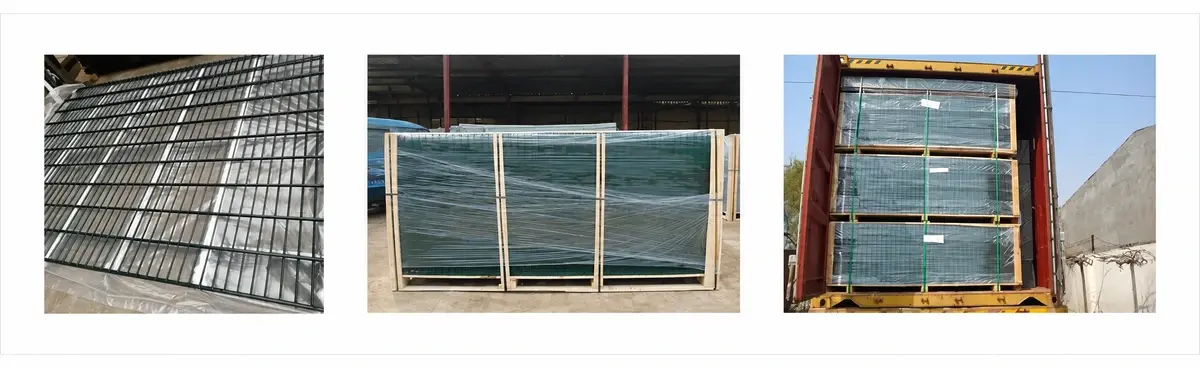
Suppose the fictional item is ordered by panel and packed 20 panels per pallet. An order for 120 panels corresponds to 6 full pallets, assuming that packing arrangement applies to the actual size and weight.
An order for 125 panels needs a separately defined packing plan for the remaining five; it should not be described as 6.25 physical pallets without explaining the actual packages.
Keep the following fields separate:
- Purchase unit and quantity.
- Pieces per standard package, where applicable.
- Actual package dimensions and gross weight.
- Label format and item references.
- Mixed-pack rules and separately packed accessories.
A pack quantity is not automatically a minimum order quantity. It is also not proof of a particular container capacity.
Add inspection fields that produce comparable records
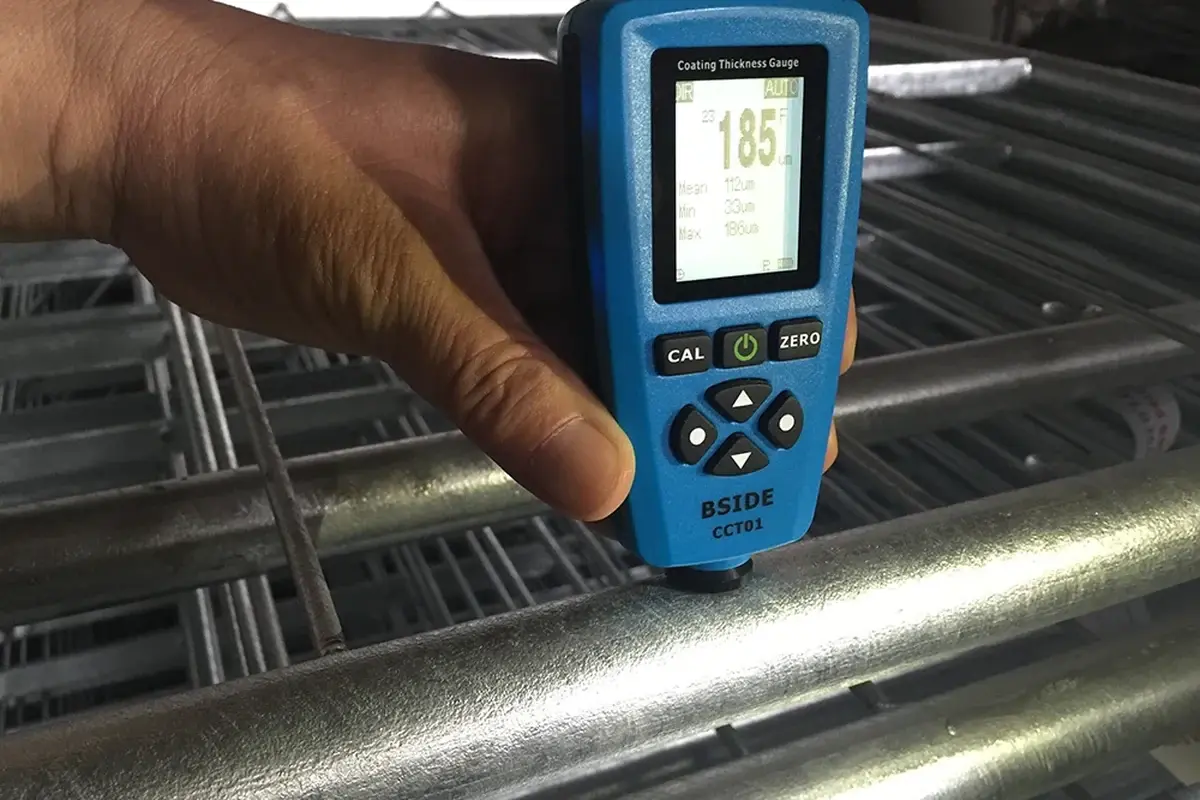
Identify dimensions to measure, locations, methods and acceptance references. Retain relevant sample and test-document references, with the scope they cover.
For a wire diameter, specify whether the inspection concerns the steel core, metallic coating or finished outer dimension. For a colour, identify the physical reference and assessment method. For a weld requirement, identify the applicable test rather than inserting an unsupported strength figure.
The dimensional inspection method and sample-approval workflow can be used to build these fields.
Control changes according to their consequences
Not every edit requires a new commercial SKU, but every technical change needs a traceable decision. A spelling correction differs from a changed wire size, cap interface or connection.
Consider a hypothetical revision from a 60 × 60 × 2 mm post to a 60 × 60 × 3 mm post. The simplified internal flat size changes from 56 mm to 54 mm. If an insert cap is part of the stocked system, the change requires a compatibility review.
The revision record should identify affected components, stock already held, open purchase orders, labels and drawings. Decide whether old and new versions can be mixed. If they cannot, separate the stock identifiers or controls before receiving the new shipment.
Keep marketing descriptions downstream of the specification
The controlled sheet should contain factual supply and inspection information. Public product descriptions can explain benefits and uses, but they should not silently expand the specification with an unsupported rating, lifespan or installation promise.
For example, a panel's close mesh description does not establish certification of the complete fence. A stock label should not inherit a supplier's performance claim without evidence covering the item and configuration.
Where an external document is used, record its source, date and scope. A reference brochure is not a substitute for your own accepted specification.
Test the sheet with a repeat-order exercise
Ask someone who did not prepare the sheet to identify the panel, order its matching fixings and calculate the package count for a stated quantity. Note where they must guess.
If they cannot tell whether a listed width is a panel or bay dimension, add the reference. If they cannot identify which cap fits the post, improve the compatibility section. If they order washers twice because kit contents are unclear, correct the unit definition.
Then release the sheet with an owner, revision and effective date. The spare-parts planning guide uses those stable codes to connect repeat purchases with the installed or stocked systems they support.