
Put three diameters in the right order
Ask the supplier to distinguish the steel core, any metallic-coated diameter and the final polymer-coated diameter. The exact measurement convention belongs in the specification. A quotation that says only “3.5 mm wire” is incomplete if one offer is bare metallic-coated wire and the other includes a polymer layer.
In an illustrative comparison, Roll A has a 3.0 mm steel core. Roll B has a 2.5 mm steel core and a 3.5 mm finished outside diameter after the specified coatings. The steel cross-sectional areas are π × 3.0² ÷ 4 = 7.069 mm² and π × 2.5² ÷ 4 = 4.909 mm².
Roll B therefore has about 30.6% less steel area in each wire. That does not prove it is unsuitable, but it proves that the two descriptions are not equivalent simply because one finished diameter is larger. Tensile properties, mesh geometry, support and connections still affect the complete system.
Compare the actual protection route
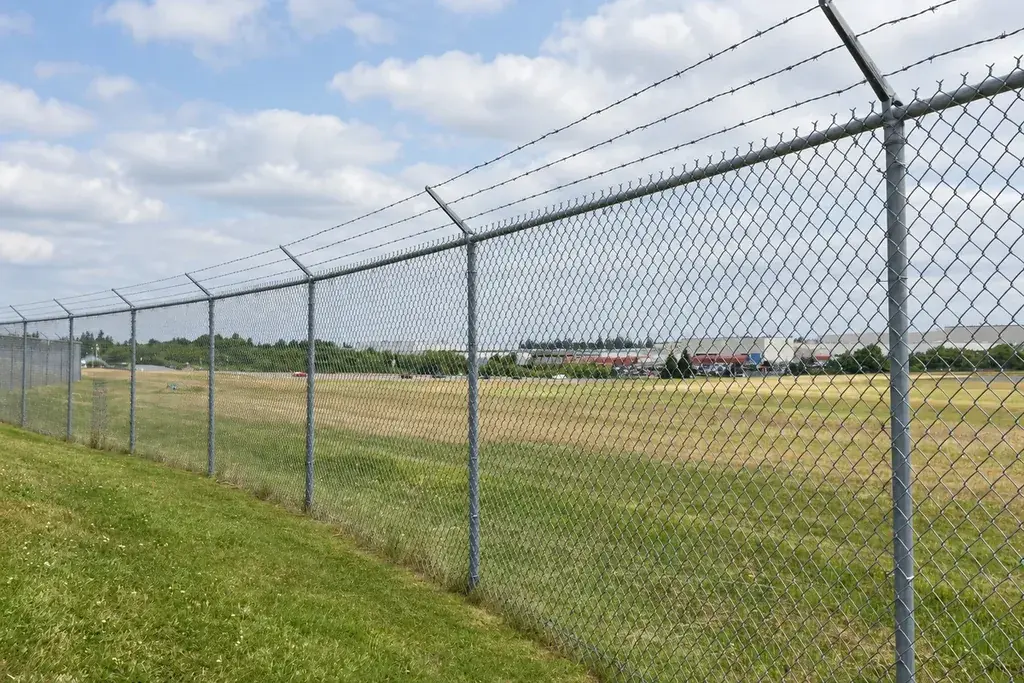
Galvanised chain link relies on its metallic coating for protection. PVC-coated chain link needs its underlying construction identified as well as the polymer. Do not assume that a coloured polymer description proves a particular zinc layer, adhesion method or corrosion result.
| Requirement | Metallic-coated option | PVC-coated option |
|---|---|---|
| Wire identity | Core and metallic coating specification | Core, metallic layer and polymer specification |
| Visible finish | Metallic surface and its expected appearance | Colour, texture and permitted variation |
| Damage review | Exposed or affected metallic layer | Polymer damage and the condition beneath it |
| Dimensional comparison | Agreed wire and aperture measurement | Separate core and finished measurements |
| Evidence | Applicable coating and material records | Records covering the actual layered construction |
For background on the supplied material forms and documentation, use the materials and coatings reference. Avoid converting a coating label into a fixed outdoor lifetime.
Choose on use and maintenance, not colour alone
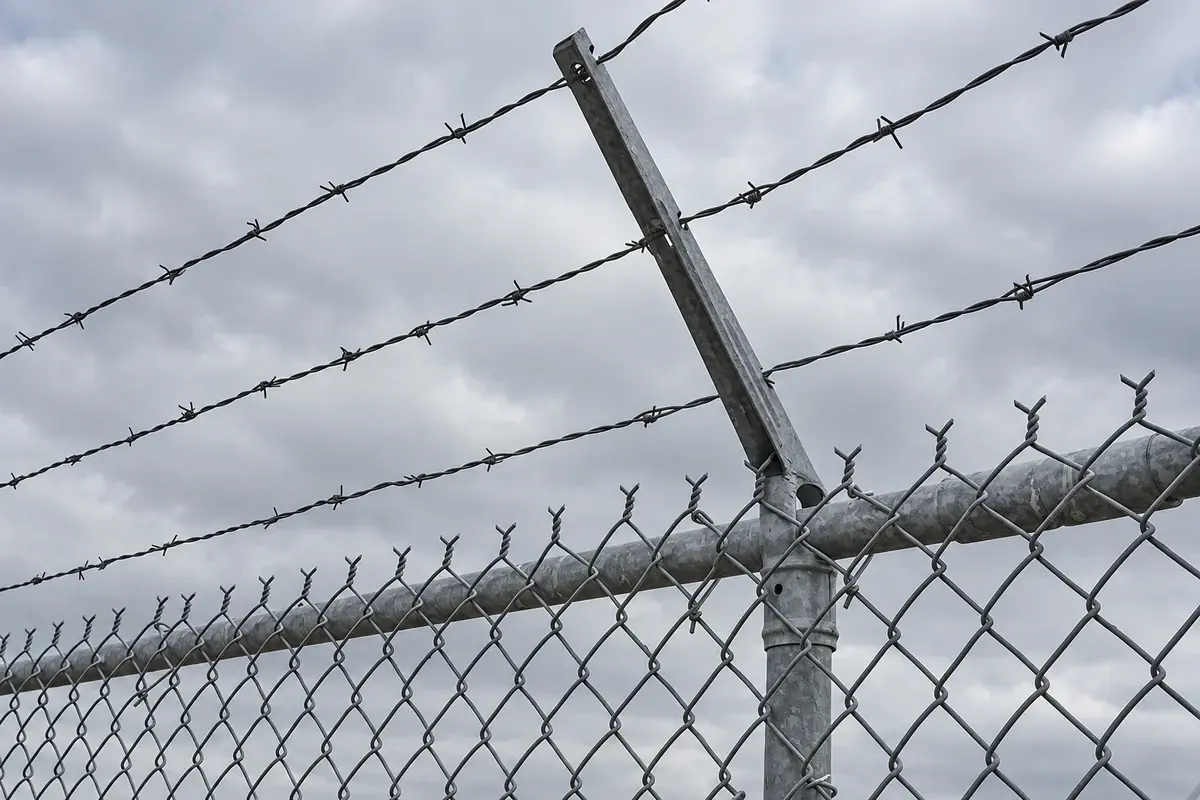
A polymer-coated roll may be preferred where appearance and a specified surface finish matter. A metallic-coated roll may suit a project that wants a simpler visible finish and inspection of that surface. Both choices still require a suitable mesh, wire specification and complete support system.
Consider how the fence will be handled, tensioned and maintained. Repeated abrasion at an incompatible tie or poorly finished connection can damage a surface locally. A coating choice should therefore include ties, tension bars, end details and repair information, not just the roll.
If the project has severe exposure, obtain a defined coating proposal and supporting evidence. Do not use a generic “coastal grade” description as the acceptance criterion. The same caution applies to claims that a coloured wire is maintenance-free.
Inspect a representative sample
- Match the sample label to the proposed product and coating reference.
- Record the mesh dimension using the agreed definition and measurement direction.
- Measure finished wire diameter at several identified positions without crushing the coating.
- Establish steel-core diameter using the documented material record or an agreed destructive sample method performed by a suitable party.
- Inspect the edge finish, cut ends, coating condition and compatibility with ties and tension components.
- Photograph and retain the accepted sample reference alongside the written specification.
Do not strip a production roll casually to obtain a measurement and then return the damaged section to service. The sampling method and any resulting repair or rejection need to be agreed.
Price the complete boundary
The roll price excludes important differences if posts, braces, rails, tensioning components or gates are not aligned. Calculate the required run lengths and terminations for the actual layout, then compare both proposals using that same arrangement.
A roll that is cheaper per metre can require a different support package. Conversely, a more expensive surface finish may be justified by the project's appearance or maintenance requirements. Identify the reason for the decision instead of claiming one coating is always superior.
Use mesh, wire and edge identification for the dimensional details and chain-link tensioning and support planning for the assembly. Keep the accepted core diameter and coating route on the final order so a later reorder preserves the original comparison.