
By FencingWise Editorial Team · Updated 17 September 2026.
Describe each layer separately
For a coated steel fence, record the steel component, any zinc or alloy layer, the surface preparation and the organic finish. Powder coating describes an application route; PVC identifies a polymer. Neither term alone specifies the complete protective system.
A powder system can include a primer and topcoat, depending on the selected product and substrate. Confirm preparation and coating arrangements in the technical data; do not assume every powder finish has the same chemistry or number of layers.
For polymer-coated chain link, the CLFMI specification guide distinguishes extruded, extruded-and-adhered, and fused-and-adhered classes. The named process matters when comparing products.
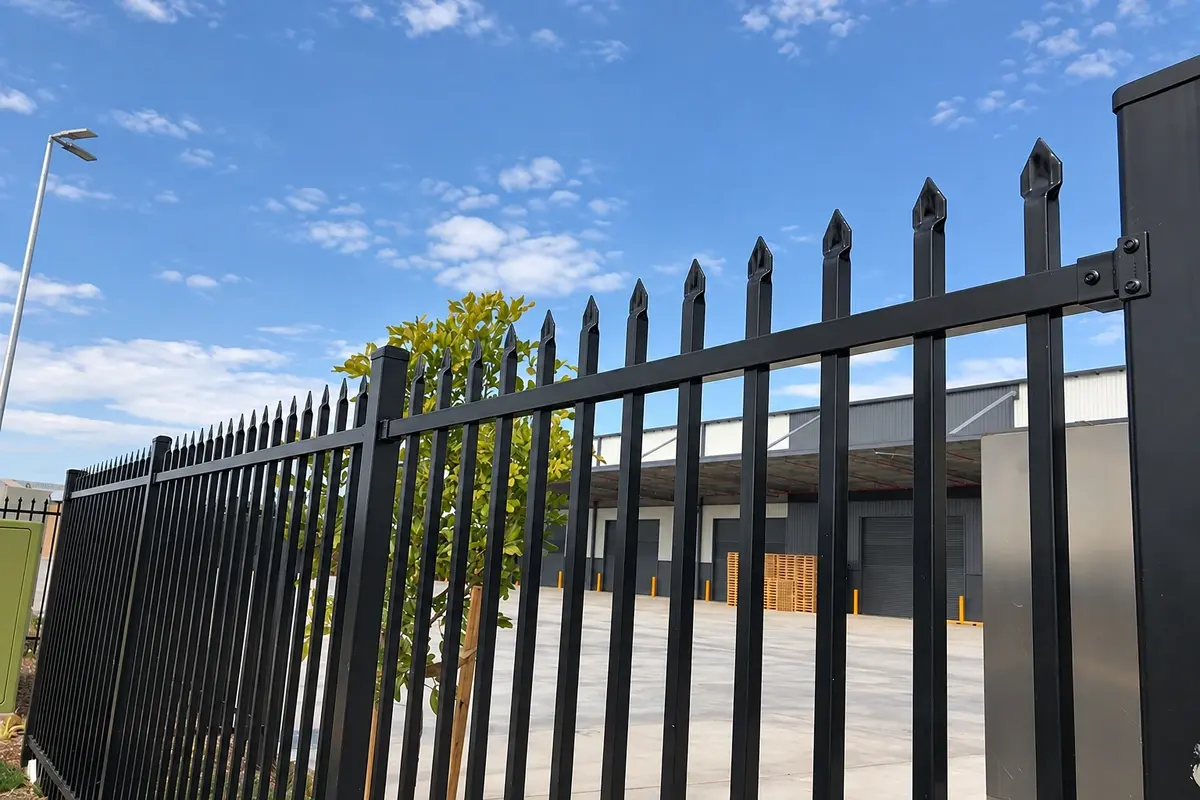
Separate steel diameter from finished diameter
Consider a hypothetical PVC-coated wire with a 2.50 mm metal-core diameter and a 3.50 mm finished diameter. Assuming a uniform concentric coating, its radial polymer thickness is:
(3.50 − 2.50) ÷ 2 = 0.50 mm, or 500 µm.
The difference in diameters is 1.00 mm, but that is the coating on both sides together. Reporting 1.00 mm as the radial thickness would double the actual result.
Now compare that wire with a hypothetical 3.00 mm steel core of the same grade. The ratio of steel cross-sectional areas is:
3.00² ÷ 2.50² = 1.44.
The larger core contains 44% more steel area per unit length. A thick polymer layer does not provide that extra steel. This area comparison is not a complete strength comparison because material grade, construction and connections also matter.
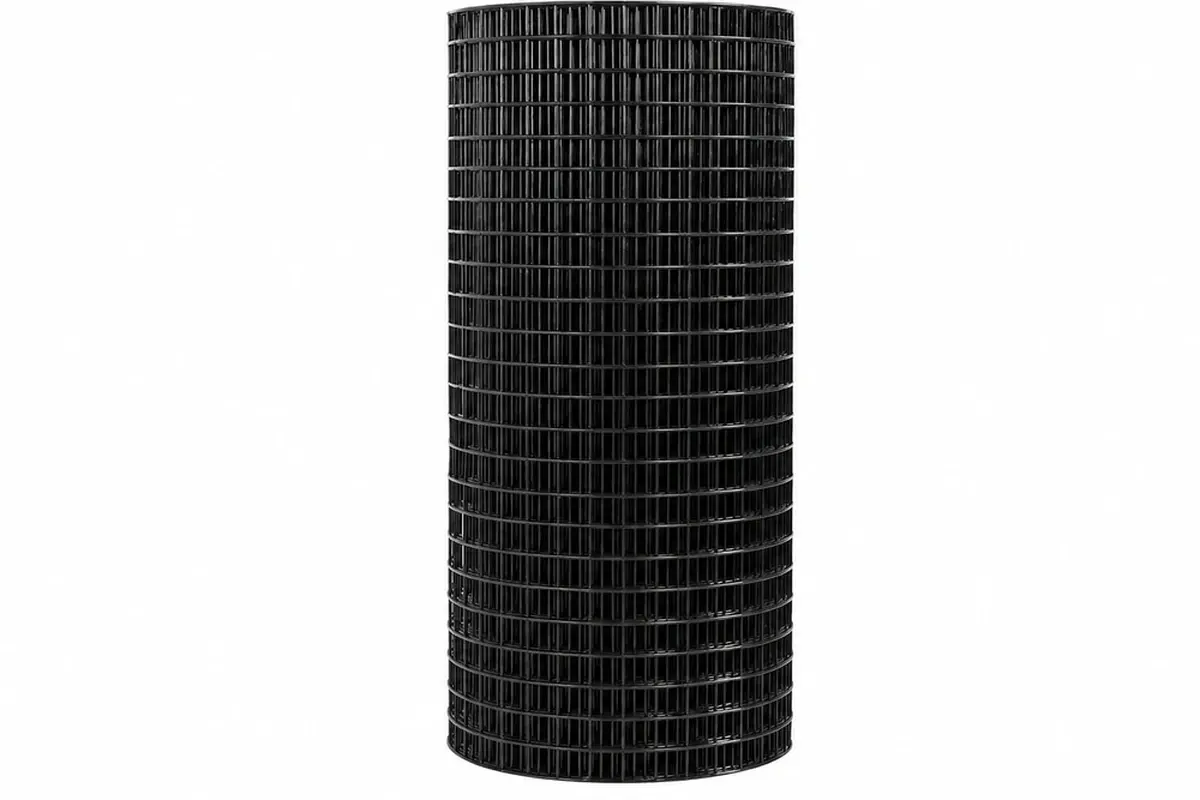
Put the options on a common comparison sheet
| Comparison item | Powder-coated option | PVC-coated option |
|---|---|---|
| Base component | Identify steel section or wire core | Identify steel wire core |
| Metallic protection | State zinc or alloy construction | State metallic coating beneath polymer |
| Organic finish | Product chemistry and layer system | Polymer type and application class |
| Thickness | Layer-specific film measurement | Defined coating measurement and finished diameter |
| Outdoor suitability | Applicable product data and exposure | Applicable product data and exposure |
| Fabrication sequence | Cutting and welding before or after coating | Weaving and cut-end treatment |
| Repair | Approved compatible repair system | Approved treatment for local damage and exposed ends |
There is no useful universal rule that the thicker-looking coating is always better. Performance depends on adhesion, continuity, preparation, weathering and the environment, as well as thickness.
Examine the vulnerable details on the actual component
On a welded panel, examine wire intersections, cut ends and any fabrication carried out after coating. On a gate, include welds, corners, drain holes and hardware attachments. On chain link, inspect the woven bends, selvage and terminal details.
A flat sample coupon can help assess a coating process, but it does not reproduce every edge or recess of a fabricated fence. Keep its role distinct from inspection of the finished component.
For an illustrative quality record, take identified observations at 10 locations on each of 3 selected components, producing 30 location records. This is a proposed recording exercise, not a standard sampling plan. The contract or applicable method must establish the real inspection extent.
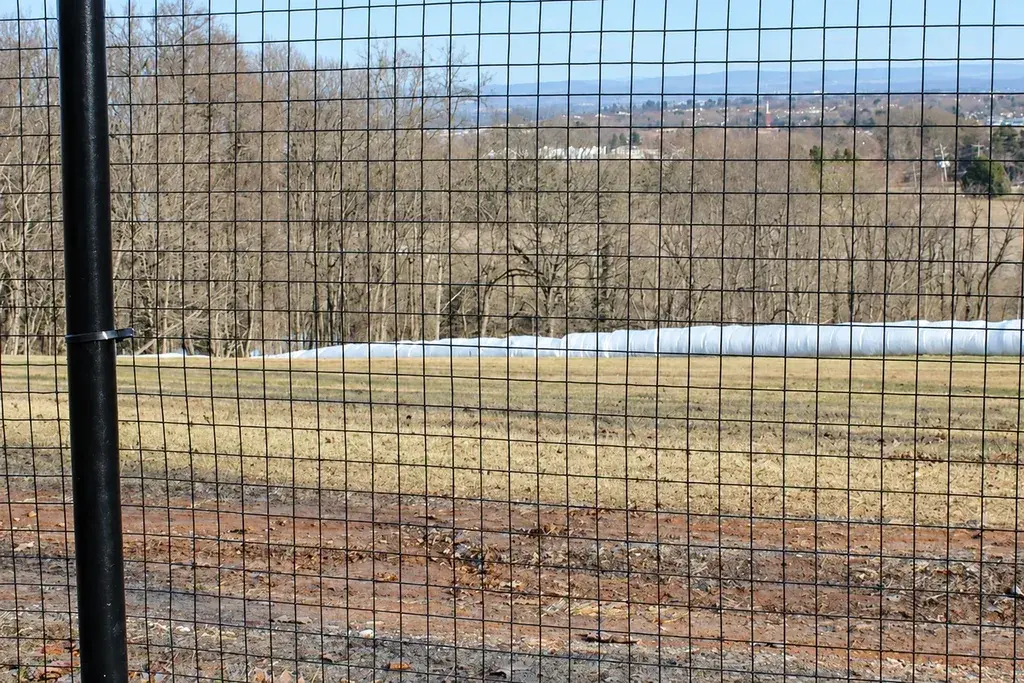
Choose the finish around construction and use
Powder coating is a practical candidate where a fabricated panel, post or gate needs a specified appearance and a compatible protective system. PVC-coated wire is a practical candidate for certain woven-wire products where that construction and finish meet the intended duty.
The decision should also consider local repair and future matching. A replacement panel may match a colour code yet differ in gloss and texture. A replacement roll may match the finished diameter while using a smaller steel core.
Specify the identity that must remain compatible: core size, mesh, coating system, colour reference and connection detail. The colour-approval guide explains why a physical reference is useful.
Inspect the quoted evidence
Read test reports against the complete layer system and substrate. A result for powder on prepared aluminium does not establish performance on galvanized steel. A report for one polymer application class should not be assigned to another without supporting evidence.
Ask whether the report covers the finished component or a process sample, and whether its preparation and cure match the proposed production route. Use the adhesion-check guide and salt-spray interpretation guide for those specific questions.
A comparable quotation should therefore describe both the structural material and the finish. That keeps a coating choice from quietly becoming a change in the amount of steel supplied.