
By FencingWise Editorial Team · Updated 17 September 2026.
Compare the swept areas
A single wide leaf needs space to rotate through its full arc. Dividing the opening between two shorter leaves reduces the radius of each arc, but creates a moving area on both sides of the entrance.
That can be useful where the depth available behind the gate is limited. It can be less useful where one side is occupied by a parked vehicle, planting or a service enclosure. Show both leaves open on the site plan before deciding that a paired arrangement saves usable space.
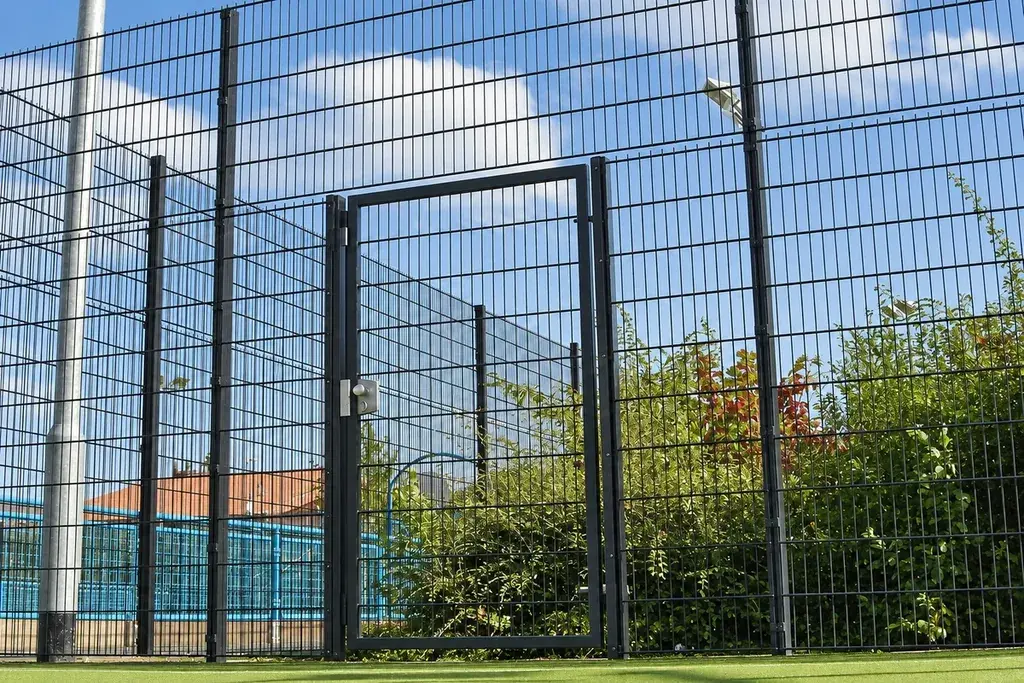
Match the leaves to the usual passage
| Use pattern | Arrangement to examine |
|---|---|
| A modest opening used frequently as one passage | A single leaf may give a straightforward operating sequence |
| A wider vehicle opening with space on both sides | Two leaves can divide the movement |
| Regular small access with occasional full-width access | Unequal leaves may separate everyday and occasional use |
| Pedestrians and vehicles using the entrance throughout the day | Consider a separate pedestrian opening rather than relying on vehicle leaves |
An unequal pair is useful only if the regularly opened leaf provides the required clear passage with the other leaf secured. Its nominal width alone does not establish that passage.
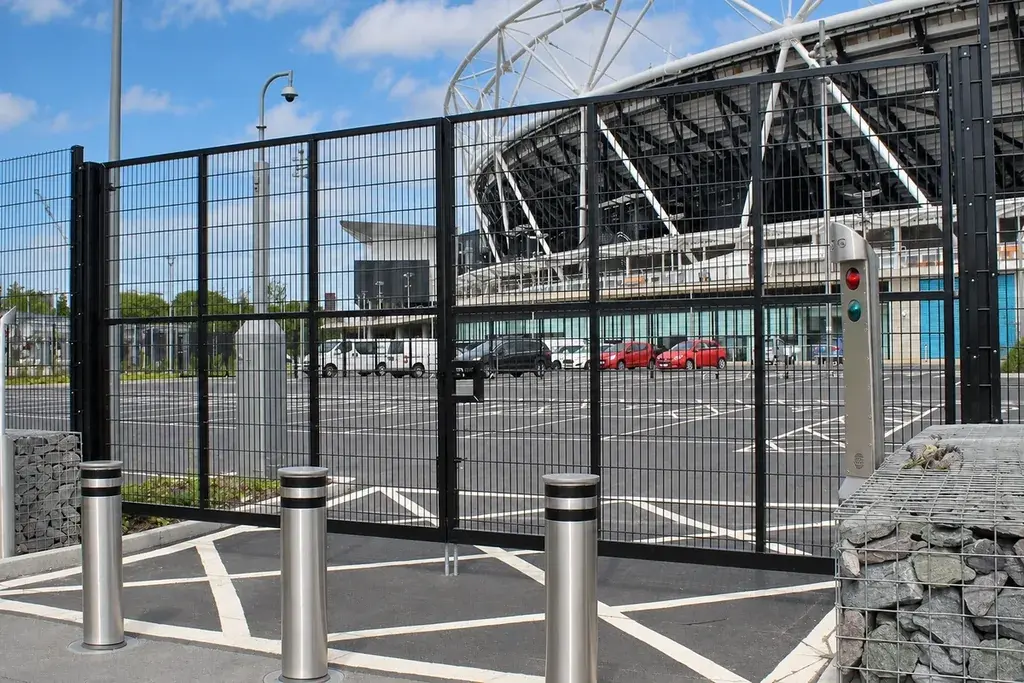
Two leaves create a meeting detail
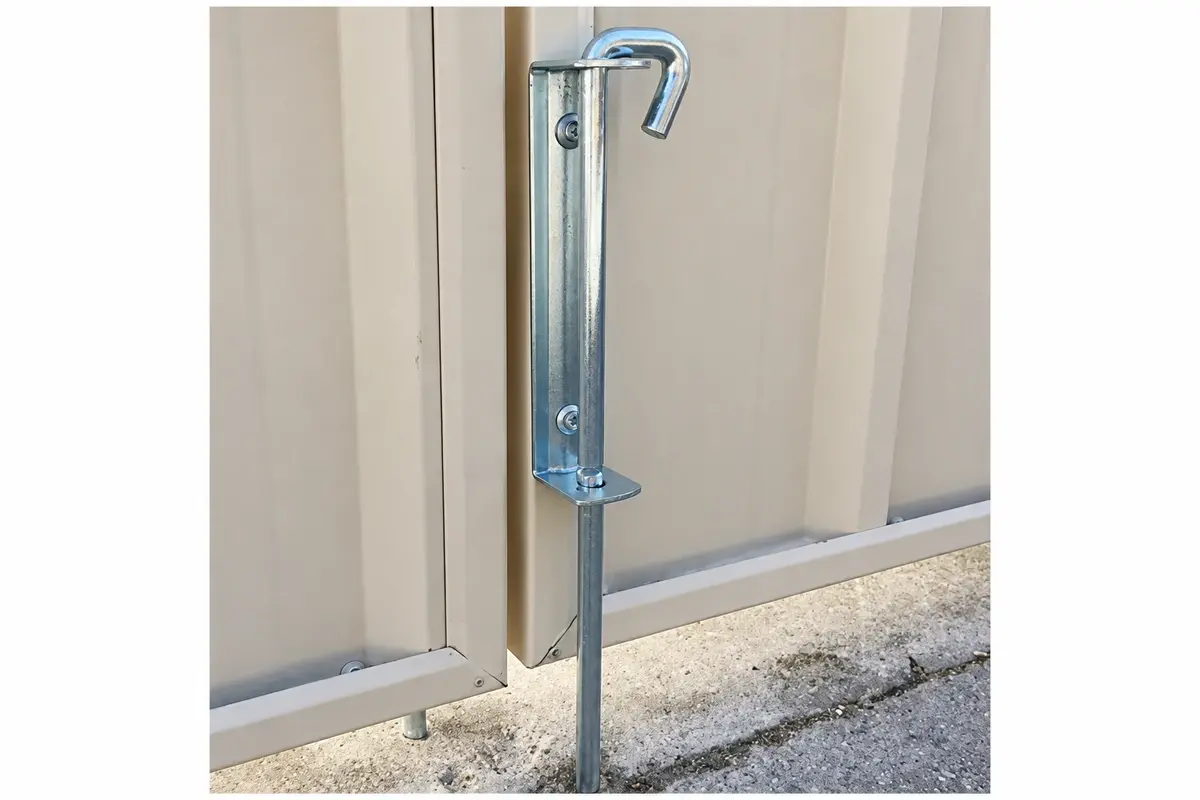
A paired gate needs a defined active and inactive leaf where the hardware uses that arrangement. Latches, drop bolts, receiving sockets and stops should match the intended closing sequence.
Both leaves also need appropriate retention in the open position. A leaf left free to move can obstruct the route or strike adjoining components. The exact retention arrangement comes from the gate design and site conditions, not from a generic allowance in the panel quotation.
Gate posts do different work from line posts
Splitting the opening does not automatically make ordinary fence posts suitable. Each hinge post supports a moving leaf, with requirements that depend on leaf dimensions, mass, infill, hardware and exposure.
See gate posts versus line posts for that distinction. The designer must assess the complete arrangement; selecting a post simply because it matches the fence height misses the gate's operating loads.
Compare the complete hardware scope
A quotation for a double-leaf gate may contain a different quantity of hinges, bolts and retention parts from a single-leaf alternative. List those components beside the leaf and post references, along with the finish.
The 358 vehicle gate and double wire gate pages provide starting points for infill selection. Settle the required clear opening before finalising the individual leaf widths.